
Most businesses chase rankings, but rankings alone don’t pay the bills. Conversion SEO brings together search visibility and strategic conversion tactics to turn organic visitors into paying customers. This approach recognizes that ranking #1 for the wrong keywords or sending traffic to poorly optimized pages wastes both your marketing budget and your SEO efforts. When you align search optimization with conversion principles, you create a system where every visitor has a clear path from search query to completed action.
What Is Conversion SEO and Why It Matters
Conversion SEO is the practice of optimizing your website to rank well in search engines while simultaneously maximizing the percentage of visitors who complete desired actions. Instead of treating SEO and conversion rate optimization as separate disciplines, this approach integrates them from the start. You’re not just attracting traffic-you’re attracting the right traffic and giving those visitors compelling reasons to convert.
The difference shows up in your bottom line. A website ranking on page one for twenty keywords might generate 10,000 monthly visitors but only convert 50 customers. Meanwhile, a site ranking for ten highly targeted keywords with optimized conversion paths might bring 3,000 visitors who convert into 200 customers. The second scenario delivers four times the results with less than one-third the traffic.
The Core Elements That Drive Results
Successful conversion SEO requires balancing multiple factors:
- Search intent matching: Understanding what users actually want when they type specific queries
- Strategic keyword selection: Prioritizing terms that indicate buying readiness
- Landing page optimization: Designing pages that answer questions and remove friction
- Trust signals: Displaying credibility markers that reassure hesitant visitors
- Clear calls-to-action: Guiding users toward the next logical step
These elements work together. Target the perfect keyword, but send traffic to a confusing page, and you’ll see high bounce rates. Build a beautiful landing page but optimize for informational keywords when you need buyers, and you’ll attract the wrong audience.

Keyword Research for Conversion Intent
The foundation of conversion SEO starts with understanding keyword intent. Not all keywords deliver equal value. Someone searching “how to tie a tie” is looking for instructions. Someone searching “buy silk ties online” is ready to purchase. The second search has dramatically higher conversion potential even if it has lower search volume.
Commercial and transactional keywords signal buying intent. Look for modifiers like “buy,” “best,” “review,” “vs,” “price,” “deal,” or “discount.” Location-based searches often convert well too, especially for service businesses. “WordPress developer Manila” shows clearer intent than “what is WordPress development.”
| Keyword Type | Example Query | Conversion Potential | Typical Use |
|---|---|---|---|
| Informational | “what is SEO” | Very Low | Blog content, education |
| Navigational | “Cyrel Nicolas SEO” | Medium | Brand searches |
| Commercial | “best SEO services Philippines” | High | Comparison pages |
| Transactional | “hire SEO specialist now” | Very High | Service pages |
According to research on semantic SEO and conversion alignment, matching content to buyer search intent can increase conversion rates by over 150%. The companies seeing these results don’t just rank-they rank for keywords where searchers are already primed to take action.
Optimizing Landing Pages for Search and Conversion
Your landing page needs to satisfy both search engines and human visitors. Google wants to see relevant content that answers the search query. Visitors want immediate clarity that they’re in the right place, plus a frictionless path to their goal.
Start with message match. If someone clicks a search result for “custom WordPress development,” the landing page headline should immediately confirm they’ve found what they need. Don’t make them hunt through generic homepage content to figure out if you offer the service they want.
Structure That Converts
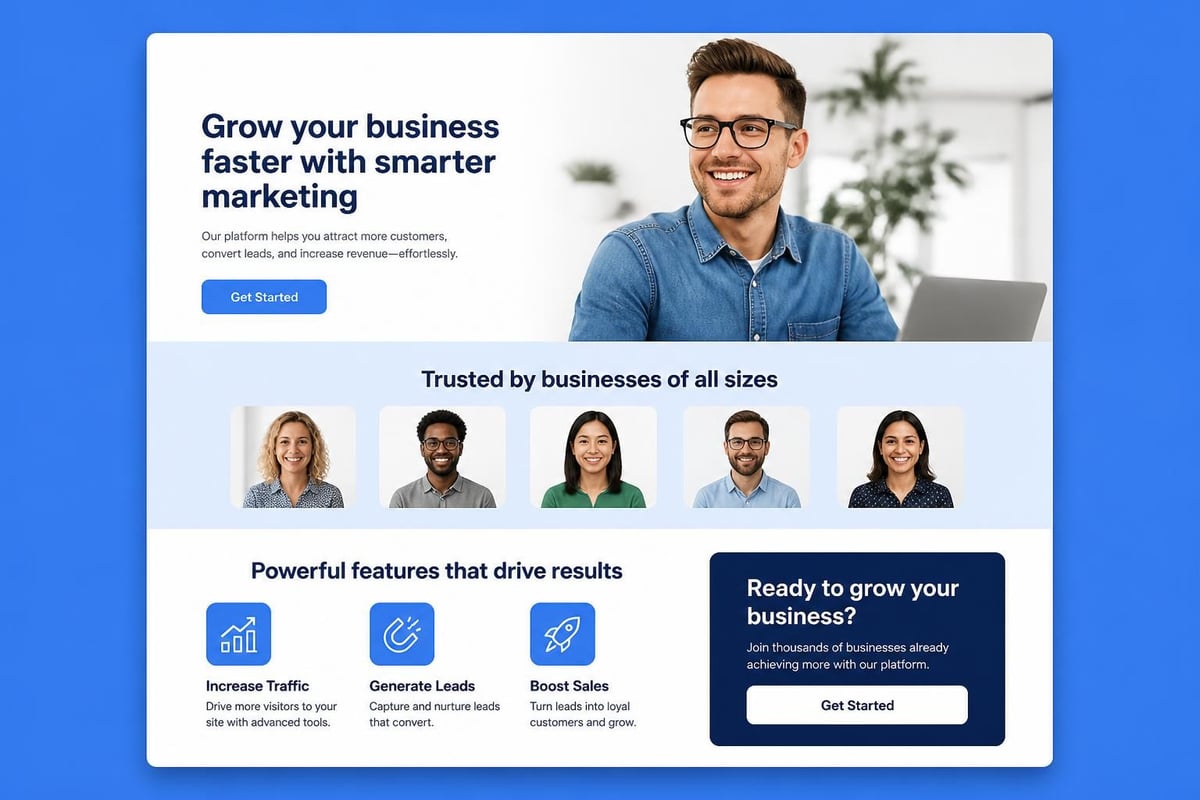
Above the fold matters most. Visitors decide within seconds whether to stay or bounce. Your headline, subheadline, and primary call-to-action should appear without scrolling. Include a supporting image that reinforces your value proposition.
The rest of your page should follow a logical flow:
- Headline that matches search intent and promises a benefit
- Subheadline that adds context or addresses the main objection
- Value proposition explaining what makes your offering unique
- Trust elements like testimonials, credentials, or case studies
- Features and benefits presented clearly with scannable formatting
- Social proof showing others have succeeded with your solution
- Clear call-to-action repeated strategically throughout the page
Implementing landing page best practices that actually convert means removing navigation clutter, speeding up page load times, and ensuring mobile responsiveness. Every element should either build trust or move visitors toward conversion.
For businesses running multiple service offerings, dedicated landing pages for each service category typically outperform general pages. WordPress SEO specialists know that platform-specific pages attract more qualified leads than generic SEO services pages.
Technical SEO That Supports Conversions
Technical problems kill conversions before visitors even see your content. A three-second delay in page load time can increase bounce rates by over 30%. Mobile layout issues frustrate the majority of searchers who now browse on phones. Broken forms mean even interested prospects can’t complete their purchase.
Page speed directly impacts conversion rates. Compress images, minify code, enable browser caching, and use a content delivery network. Tools like Google PageSpeed Insights identify specific bottlenecks. Many businesses see immediate conversion lifts just from improving load times from four seconds to under two.
Security signals matter too. Display SSL certificates prominently (the padlock icon). Use HTTPS across your entire site. Add trust badges near forms or checkout buttons. These small details reassure visitors that sharing their information is safe.
Mobile Optimization as a Conversion Strategy
More than 60% of searches now happen on mobile devices. Your conversion SEO strategy fails if mobile visitors can’t easily navigate your site or complete actions. Test your pages on actual phones, not just desktop browser simulators.
Common mobile conversion killers include:
- Forms requiring excessive typing on small keyboards
- Buttons too small to tap accurately
- Pop-ups that can’t be closed on mobile screens
- Phone numbers that aren’t click-to-call enabled
- Checkout processes requiring too many steps
Simplifying mobile experiences often boosts overall conversion rates even for desktop visitors. The clarity required for small screens usually improves desktop usability too.
Content Strategy That Converts Visitors
Content serves dual purposes in conversion SEO: attracting search traffic and persuading visitors to act. Every piece of content should answer specific questions while guiding readers toward a conversion goal.
Map content to the buyer journey. Top-of-funnel visitors need educational content that builds awareness. Middle-of-funnel prospects want comparison content and detailed solutions. Bottom-of-funnel searchers need clear product information and reasons to choose you over competitors.
For example, someone searching “how to increase web traffic” might benefit from a comprehensive guide that eventually introduces professional SEO services as a solution. Someone searching “hire SEO specialist Philippines” needs immediate service details, pricing context, and contact information.
| Funnel Stage | Content Type | SEO Keywords | Conversion Goal |
|---|---|---|---|
| Awareness | Educational guides, how-to articles | “how to,” “what is,” “guide to” | Email signup, resource download |
| Consideration | Comparison posts, case studies | “best,” “vs,” “review,” “options” | Consultation request, demo |
| Decision | Service pages, testimonials | “hire,” “buy,” “pricing,” “contact” | Purchase, contract signing |
Include clear calls-to-action in every piece of content. A blog post about entity-based SEO should still guide interested readers toward a next step-whether that’s downloading a checklist, scheduling a consultation, or exploring your services page.
Conversion Rate Optimization Meets SEO
Traditional CRO focuses on improving conversion rates for existing traffic through A/B testing, heat mapping, and user feedback. Conversion SEO adds the search dimension: optimizing pages to both rank well and convert efficiently.
Start by analyzing which pages already rank but underperform on conversions. Maybe you’re ranking #3 for a valuable keyword but only converting 1% of visitors while competitors convert 5%. That’s your opportunity. Small improvements to a page that already attracts traffic deliver immediate results.
Test headline variations that maintain SEO keyword inclusion while improving clarity. A headline like “Professional SEO Services Philippines – Cyrel Nicolas” might rank well but “Rank Higher on Google: Expert SEO Services in the Philippines” could convert better while targeting similar keywords.
Test call-to-action placement and wording. “Contact us” is generic. “Get Your Free SEO Audit” or “Start Ranking Higher Today” communicates specific value. Position CTAs where they feel natural-after presenting benefits, not before explaining what you offer.
According to conversion rate optimization research, companies that implement systematic testing see average conversion improvements of 49% within three months. Combining these tactics with strong organic rankings compounds your results.
Measuring What Matters
Track metrics that connect SEO performance to business outcomes:
- Conversion rate by keyword: Which search terms bring visitors who actually convert?
- Landing page conversion rates: Which pages need optimization versus which are working well?
- Assisted conversions: How does organic search contribute to multi-touch conversions?
- Revenue per visitor: Are you attracting high-value traffic or just volume?
- Bounce rate by source: Are certain keywords bringing unqualified traffic?
Tools like Google Analytics 4, Google Search Console, and heat mapping software reveal where visitors engage and where they abandon. Use this data to prioritize optimization efforts. Fix high-traffic, low-conversion pages first for maximum impact.

Strategic Internal Linking for Conversions
Internal links guide visitors through your content while distributing SEO authority across your site. From a conversion perspective, internal linking creates pathways that move visitors from awareness content toward conversion pages.
Link from blog posts to relevant service pages using descriptive anchor text. An article about improving rankings should link to your SEO packages with anchor text that explains what readers will find. Don’t use “click here”-use “explore our comprehensive SEO packages designed for growing businesses.”
Create content clusters around your core services. A main pillar page about SEO services can link to supporting content about technical SEO, link building, and content optimization. Those supporting pages link back to the pillar and to relevant service offerings.
This structure helps search engines understand your site’s topical authority while giving visitors multiple entry points into your conversion funnel. Someone researching SEO strategies discovers your comprehensive content, follows links to case studies showing results, then naturally progresses to your service inquiry page.
Building Trust Signals Into Your SEO Strategy
Trust determines whether qualified visitors convert or bounce. Search optimization brings people to your site, but trust signals convince them to take action.
Display client results prominently. Case studies showing specific outcomes outperform generic testimonials. Numbers matter: “increased organic traffic 247%” is more compelling than “great results.” Real company names and photos add credibility when privacy allows.
Companies like Elite OPS achieved 45.99% conversion rate increases by combining technical SEO improvements with strategic trust-building elements. Similarly, Workfront saw a 104% conversion increase by recovering search presence and optimizing landing pages with credibility markers.
Third-party validation works powerfully. Industry certifications, awards, media mentions, and recognizable client logos all build immediate trust. If you’ve worked with known brands, feature those relationships (with permission).
Social Proof Elements That Convert
Include multiple forms of social proof throughout your conversion paths:
- Video testimonials from satisfied clients
- Quantified case study results with before/after data
- Industry certifications and professional credentials
- Years in business and number of clients served
- Media appearances or published articles
- Client logos from recognizable companies
- Real-time notification widgets showing recent conversions
- Security badges and privacy certifications
Position these elements strategically near decision points like contact forms or pricing information. Visitors hesitate most right before converting-that’s exactly when they need reassurance.
Integrating Conversion SEO With Overall Marketing
Conversion SEO doesn’t exist in isolation. Your organic search strategy should align with paid advertising, social media, email marketing, and offline efforts to create consistent messaging and smooth customer journeys.
Ensure message consistency across channels. If your SEO-optimized landing pages promise 24-hour response times, your social media and email communications should deliver on that promise. Broken expectations destroy conversion rates faster than poor design.
Use remarketing to re-engage visitors who found you organically but didn’t convert initially. Someone who spent five minutes reading your service page but didn’t fill out the contact form shows interest. Remarketing ads through platforms like OxD PR’s digital marketing services can bring them back when they’re ready to commit.
Cross-channel attribution reveals how organic search contributes to conversions that span multiple touchpoints. A visitor might discover you through organic search, visit again through social media, receive your email newsletter, then finally convert after seeing a remarketing ad. Without proper attribution, you might undervalue your SEO investment.
Marketing systems that connect website activity to CRM data help track the full customer journey. MDO Digital’s marketing systems approach shows how automation and structured data create clearer paths from initial search to completed conversion.
Advanced Conversion SEO Tactics
Once you’ve mastered the fundamentals, advanced tactics can push conversion rates even higher. Personalization based on search queries, dynamic content that adapts to visitor behavior, and predictive modeling of conversion likelihood all represent the frontier of conversion SEO.
Dynamic content insertion changes page elements based on the keyword that brought the visitor. Someone searching “enterprise SEO services” sees messaging about scalability and team size. Someone searching “affordable SEO Philippines” sees emphasis on cost-effectiveness and ROI. Both visitors land on the same service page, but the experience adapts to their priorities.
Schema markup enhances search results with rich snippets that improve click-through rates. Reviews, pricing, availability, and FAQ structured data make your listings more prominent and informative in search results. Higher CTR from search results brings more qualified traffic to your optimized landing pages.
Video content embedded on landing pages typically improves conversion rates when used strategically. Explanation videos, customer testimonial videos, or product demonstration videos keep visitors engaged longer and answer questions that might otherwise prevent conversion. Tools like AdsRaw’s AI-powered video creation make producing professional video content more accessible for testing and optimization.
Conversion-Focused Content Formats
Different content formats serve different conversion goals:
- Long-form guides (2000+ words) establish authority and rank for competitive keywords while including multiple conversion touchpoints
- Comparison posts capture high-intent searchers evaluating options and guide them toward your solution
- Calculator tools provide immediate value while collecting lead information
- Video tutorials build trust and keep visitors engaged longer
- Interactive assessments qualify leads while offering personalized recommendations
- Case study pages provide social proof for specific industries or use cases
Match format to search intent. Someone searching “SEO checklist” wants a scannable list, not a philosophical essay. Someone researching “how to choose an SEO agency” appreciates detailed guidance with decision criteria.
Local Conversion SEO for Service Businesses
Service businesses benefit especially from location-specific conversion SEO. Local searchers often show higher conversion intent-someone searching “SEO specialist near me” is actively looking to hire, not just researching.
Optimize Google Business Profile with accurate information, regular posts, and customer reviews. Respond to all reviews professionally. Include location-specific keywords naturally in your content and meta data without keyword stuffing.
Create location pages for each area you serve, but only if you can provide unique, valuable content for each page. Thin content with just city names swapped out hurts more than it helps. Better to have one strong page covering your entire service area than ten weak pages that offer nothing unique.
Local link building from area businesses, chambers of commerce, and community organizations improves both rankings and credibility. These links signal geographic relevance to search engines while potential customers see you as an established local presence.
For businesses offering local SEO services, demonstrating expertise through location-specific case studies and community involvement builds trust that converts local searchers into clients.
Common Conversion SEO Mistakes to Avoid
Even experienced marketers make mistakes that undermine conversion SEO performance. Recognizing these pitfalls helps you avoid wasting time and budget on tactics that don’t work.
Optimizing for rankings without conversion goals tops the list. Ranking #1 for keywords that don’t convert wastes SEO investment. Always validate that target keywords have commercial intent and that you can serve that intent profitably.
Ignoring mobile users despite mobile-first indexing hurts both rankings and conversions. Test everything on actual mobile devices. What looks fine on desktop often breaks on phones.
Slow page speed kills conversions before content quality matters. Compress images, minimize code, use browser caching, and choose fast hosting. A beautiful page that takes six seconds to load converts worse than an average page that loads in under two seconds.
Weak or unclear calls-to-action leave visitors uncertain about next steps. Every page needs a clear, specific CTA that tells visitors exactly what to do and what they’ll get. “Learn More” is vague. “Schedule Your Free SEO Audit” is specific and valuable.
Over-complicating forms by asking for unnecessary information reduces completion rates. Every form field you remove typically increases conversions by 10-20%. Ask only for information you absolutely need at that stage. You can collect additional details later.
Neglecting proof and trust signals makes visitors hesitate. Unknown brands need more social proof than established companies. Display testimonials, certifications, guarantees, and security badges prominently.
Testing and Iteration for Continuous Improvement
Conversion SEO requires ongoing testing and refinement. Markets change, competitors adjust their strategies, and search algorithms evolve. What worked last year might underperform today.
A/B testing reveals which variations actually improve conversions versus which just seem like they should work. Test one element at a time for clear results. Change the headline, the CTA color, the form length, or the image-but not all simultaneously, or you won’t know which change drove results.
Statistical significance matters. Don’t end tests too early. A variation that looks better after 100 visitors might perform worse after 10,000. Use proper testing tools that account for sample size and confidence intervals.
Document everything. Track what you tested, why you tested it, the results, and what you learned. This institutional knowledge prevents repeating failed experiments and identifies patterns in what works for your specific audience.
Seasonal patterns affect both search volume and conversion rates. Analyze performance quarterly and annually to identify trends. Some keywords convert better in certain months. Some traffic sources deliver higher-quality leads during specific seasons.
Conclusion
Conversion SEO transforms your organic traffic from vanity metrics into real business growth by ensuring every visitor has a clear path to becoming a customer. The strategies outlined above-from intent-based keyword research and conversion-optimized landing pages to strategic trust signals and continuous testing-work together to maximize the return on your SEO investment. With nearly 15 years of experience optimizing websites for both rankings and conversions, Cyrel P. Nicolas helps businesses across the Philippines turn their organic search presence into a reliable source of qualified leads and sales.