
Small businesses face unique challenges when competing for attention online. Limited budgets, lean teams, and fierce competition from larger companies make it difficult to stand out. Yet search engine optimization remains one of the most cost-effective ways to attract customers who are actively looking for your products or services. Unlike paid advertising that stops working the moment you stop paying, SEO marketing for small businesses builds long-term visibility that compounds over time.
Why SEO Marketing Matters for Small Business Growth
SEO marketing for small businesses delivers sustainable results by improving your website’s visibility in search engine results pages. When potential customers search for services in your area, proper optimization ensures your business appears when it matters most.
The core benefits include:
- Increased organic traffic from people actively searching for your solutions
- Better conversion rates compared to cold outreach or interruption marketing
- Long-term visibility that doesn’t disappear when ad budgets run out
- Enhanced credibility and trust through higher search rankings
- Competitive advantage over businesses that neglect their online presence
Small businesses that invest in SEO typically see gradual but consistent growth. The first three months focus on foundation building, while months four through twelve begin delivering measurable traffic increases and lead generation.
How Search Engines Evaluate Small Business Websites
Search engines like Google use hundreds of ranking factors to determine which websites deserve top positions. For small businesses, the most important factors fall into three categories: relevance, authority, and user experience.
Relevance means your content matches what searchers are looking for. Authority reflects how trustworthy search engines consider your website based on backlinks and content quality. User experience encompasses site speed, mobile responsiveness, and how easily visitors can find information.

Building Your Small Business SEO Foundation
The foundation of effective SEO marketing for small businesses starts with technical health, keyword research, and content strategy. Without these elements working together, even the best marketing efforts fall short.
Technical SEO Basics Every Small Business Needs
Your website must be accessible and understandable to search engines before you can rank. Technical SEO ensures search engines can crawl, index, and interpret your content correctly.
| Technical Element | Why It Matters | Quick Check |
|---|---|---|
| Mobile responsiveness | Over 60% of searches happen on mobile devices | Test on actual phones |
| Site speed | Slow sites lose visitors and rankings | Use Google PageSpeed Insights |
| SSL certificate | Required for trust and ranking | URL should show https:// |
| XML sitemap | Helps search engines find all your pages | Submit to Google Search Console |
| Clean URL structure | Makes navigation logical for users and bots | Avoid complex parameters |
The technical aspects of SEO require attention but don’t need to be overwhelming. Most modern website platforms handle basic technical requirements automatically, though verification remains important.
Keyword Research That Matches Business Goals
Effective keyword research identifies the exact phrases your potential customers use when searching. Small businesses benefit most from targeting specific, intent-driven keywords rather than broad generic terms.
Start by categorizing keywords into three types:
- Informational keywords: Users researching solutions (“how to fix leaky faucet”)
- Commercial keywords: Users comparing options (“best plumber near me”)
- Transactional keywords: Users ready to buy (“emergency plumber services”)
Focus heavily on commercial and transactional keywords. While informational content builds authority, conversion-focused keywords drive revenue faster for businesses with limited resources.
Long-tail keywords (three or more words) offer advantages for small businesses. They face less competition, attract more qualified visitors, and convert at higher rates than single-word searches.
Local SEO Strategies That Drive Foot Traffic
Local SEO marketing for small businesses focuses on appearing in geographic-specific searches and map results. For businesses serving local customers, this represents the highest-value SEO opportunity.
Optimizing Your Google Business Profile
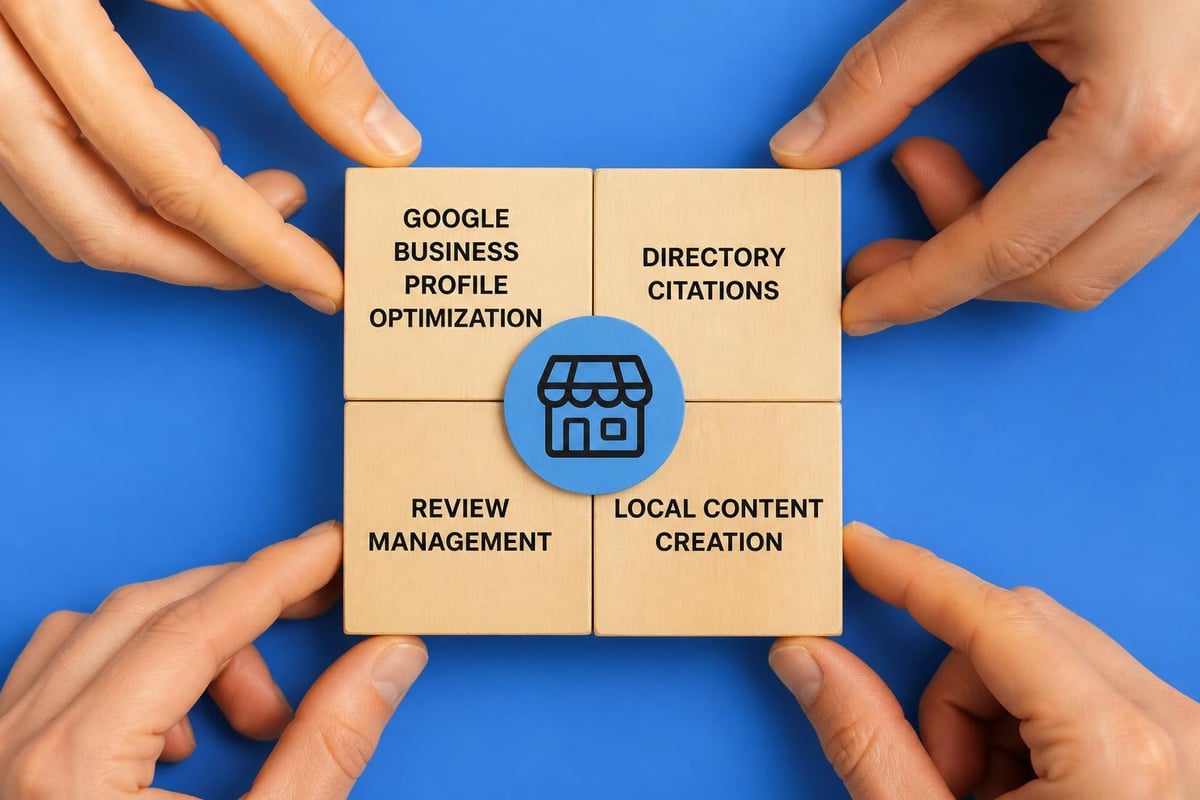
Your Google Business Profile serves as your digital storefront in local search results. Complete optimization includes accurate business information, regular updates, and active review management.
Essential profile elements:
- Accurate business name, address, and phone number (NAP)
- Primary and secondary business categories
- Business hours including holiday schedules
- High-quality photos of your location, team, and work
- Regular posts about services, offers, and updates
- Prompt responses to all customer reviews
Consistency matters tremendously. Your NAP information must match exactly across your website, Google Business Profile, and all online directories. Even small variations like “Street” versus “St.” can confuse search engines and weaken local rankings.
Building Local Citations and Directory Listings
Citations are online mentions of your business name, address, and phone number. Building quality local citations strengthens your local SEO foundation and helps search engines verify your business legitimacy.
Focus on authoritative directories first. Platforms like Yelp, Yellow Pages, Better Business Bureau, and industry-specific directories carry more weight than obscure listing sites.
| Directory Type | Examples | Priority Level |
|---|---|---|
| Major platforms | Google, Bing Places, Apple Maps | Critical |
| General directories | Yelp, Yellow Pages, BBB | High |
| Industry-specific | Angi for contractors, Avvo for lawyers | High |
| Local chambers | Chamber of Commerce, business associations | Medium |
| Niche sites | Local blogs, community resources | Medium |
The importance of consistent NAP data across authoritative directories cannot be overstated. Inconsistencies signal unreliability to search engines and potential customers alike.
Content Marketing for Small Business SEO
Content creation drives organic traffic by answering customer questions and demonstrating expertise. Small businesses need strategic content that serves both search engines and human readers.
Creating Service Pages That Convert
Service pages target commercial intent keywords and guide visitors toward conversion. Each service you offer deserves a dedicated, optimized page rather than listing everything on one generic services page.
Effective service page structure:
- Clear headline with target keyword
- Immediate answer to “what is this service”
- Benefits focused on customer outcomes
- Process explanation building confidence
- Trust signals like testimonials or certifications
- Strong call-to-action
- FAQ section addressing common concerns
Write naturally for humans first. Keyword stuffing damages readability and rankings. Aim for natural keyword inclusion in headlines, first paragraphs, and throughout content where contextually appropriate.
Blog Content That Attracts and Educates
Blog posts target informational keywords and build topical authority. While they may not drive immediate sales, they attract visitors early in the buying journey and establish your expertise.
Choose topics based on customer questions you hear repeatedly. Sales teams, customer service interactions, and social media comments reveal what your audience wants to know.
The strategies for small business SEO emphasize creating credible, authoritative content that genuinely helps readers rather than just chasing rankings.
Link Building for Small Business Authority
Backlinks from other websites signal authority and trustworthiness to search engines. For small businesses, quality matters far more than quantity when building links.
Earning Links Through Relationships and Value
The most sustainable approach focuses on creating link-worthy assets and building genuine relationships. Small businesses have natural advantages here through community involvement and local connections.
Practical link building tactics:
- Sponsor local events or organizations for website mentions
- Contribute expert insights to journalists through services like HARO
- Create valuable resources other businesses want to reference
- Build relationships with complementary local businesses
- Participate in local business associations and chambers
- Guest post on relevant industry blogs and publications
Low-quality links from spam directories or paid link schemes harm more than help. Search engines penalize manipulative link building, making earning high-quality backlinks through legitimate means essential.
Leveraging Local Partnerships for Links
Local businesses, organizations, and media outlets provide realistic link opportunities. These locally-relevant backlinks carry significant weight for small businesses targeting geographic markets.
Partner with vendors, suppliers, or complementary service providers for mutual linking. A wedding photographer might exchange links with florists, venues, and caterers. These relevant connections benefit both SEO and customer experience.
Measuring SEO Success for Small Businesses
Tracking the right metrics helps small businesses understand what’s working and where to invest more effort. Focus on measurements that connect directly to business outcomes rather than vanity metrics.
Essential SEO Metrics to Monitor
| Metric | What It Shows | How Often to Check |
|---|---|---|
| Organic traffic | Visitors from search engines | Weekly |
| Keyword rankings | Visibility for target terms | Bi-weekly |
| Conversion rate | Percentage of visitors taking action | Weekly |
| Local pack rankings | Map result positions | Weekly |
| Backlink growth | New referring domains | Monthly |
| Page load speed | Technical performance | Monthly |
Google Search Console and Google Analytics provide free access to most essential metrics. Small businesses don’t need expensive enterprise tools to track performance effectively.

Setting Realistic SEO Timelines and Expectations
SEO marketing for small businesses requires patience. Unlike paid advertising that produces immediate results, organic optimization builds momentum gradually.
Typical SEO timeline:
- Months 1-3: Foundation building, minimal traffic changes
- Months 4-6: Initial ranking improvements, modest traffic growth
- Months 7-12: Accelerating results, significant traffic increases
- Year 2+: Compounding returns, sustained growth
Competitive industries require longer timelines. A plumber in a small town might see results faster than a lawyer in a major city. Understanding actionable SEO strategies tailored for resource-limited businesses helps set appropriate expectations.
Common Small Business SEO Mistakes to Avoid
Small businesses often make predictable mistakes that waste time and resources. Awareness of these pitfalls helps you focus efforts on high-impact activities.
Targeting the Wrong Keywords
Chasing high-volume keywords with intense competition wastes resources. A local bakery shouldn’t target “best cakes” nationally but rather “custom birthday cakes [city name]” locally.
Generic keywords attract unqualified traffic. Someone searching “marketing tips” probably isn’t ready to hire your agency, but “digital marketing agency [city]” indicates buying intent.
Neglecting Mobile Optimization
Over 60% of searches happen on mobile devices. Websites that don’t function well on phones lose both rankings and conversions. Test your site regularly on actual smartphones, not just desktop browsers resized.
Mobile optimization extends beyond responsive design. Consider touch-friendly buttons, readable font sizes without zooming, and fast loading on cellular connections.
Ignoring Local SEO Opportunities
Small businesses serving geographic areas cannot afford to skip local optimization. Your Google Business Profile, local citations, and location-specific content often deliver faster returns than broader SEO efforts.
The expert tips for small business SEO consistently emphasize the importance of emerging search trends and strategic content planning aligned with business goals.
Building an SEO Action Plan for Your Business
A structured approach prevents overwhelm and ensures consistent progress. Small businesses need prioritized action plans that fit limited time and budgets.
Month One Priorities
Week 1: Audit current website status
- Run technical SEO scan
- Document all current rankings
- Set up Google Search Console and Analytics
- Claim and verify Google Business Profile
Week 2: Complete keyword research
- Identify 20-30 target keywords
- Map keywords to existing or needed pages
- Analyze competitor rankings
- Document search intent for each keyword
Week 3: Fix critical technical issues
- Ensure mobile responsiveness
- Install SSL certificate if needed
- Optimize site speed
- Create XML sitemap
Week 4: Optimize existing content
- Update title tags and meta descriptions
- Improve service page content
- Add location information where relevant
- Create or enhance About and Contact pages
Quarterly SEO Goals for Sustained Growth
Break annual objectives into manageable quarterly goals. This approach maintains momentum while allowing adjustments based on results.
Q1: Foundation and local presence
- Complete technical optimization
- Fully optimize Google Business Profile
- Build 10-15 quality local citations
- Create or optimize 5 core service pages
Q2: Content and authority building
- Publish 8-12 blog posts
- Earn 3-5 quality backlinks
- Expand keyword targeting
- Improve rankings for 5 primary keywords
Q3: Expansion and refinement
- Create advanced content assets
- Build relationships with link partners
- Optimize conversion paths
- Target 10 additional keywords
Q4: Analysis and planning
- Comprehensive performance review
- Identify successful tactics to scale
- Eliminate underperforming activities
- Plan next year’s strategy
For small businesses looking for structured support, tailored SEO packages provide comprehensive strategies covering audits, optimization, content, and ongoing refinement without requiring internal expertise.
Staying Current with SEO Best Practices
Search engine algorithms evolve continuously. Small businesses need reliable information sources without getting lost in information overload.
Trusted SEO Information Sources
Following authoritative websites for SEO helps you stay informed about algorithm updates and best practices without wasting time on unreliable sources.
Recommended resources include:
- Search Engine Journal for industry news and strategy guides
- Google Search Central Blog for official algorithm updates
- Moz Blog for beginner-friendly explanations
- Search Engine Land for breaking news
- Ahrefs Blog for technical deep-dives
Dedicate one hour monthly to reading industry updates. This consistent learning prevents falling behind while avoiding analysis paralysis.
Adapting to Algorithm Changes
Major algorithm updates can shift rankings overnight. Rather than panicking, focus on fundamental principles that remain constant: create valuable content, build genuine authority, and prioritize user experience.
Most algorithm updates reward sites already following best practices. Businesses focused on manipulation tactics face penalties, while those genuinely serving customers see improvements or minimal impact.
The valuable sources for SEO information help businesses navigate changes with reliable, expert-backed guidance rather than speculation.
DIY SEO vs. Professional Help for Small Businesses
Small businesses must decide whether to handle SEO internally or work with specialists. The right choice depends on budget, time availability, technical skill, and business complexity.
When DIY SEO Makes Sense
Handle SEO internally when you have:
- Limited budget for outside services
- Someone on staff with time to learn and implement
- A relatively simple website and service offering
- Local market with moderate competition
- Willingness to invest time for 6-12 months before seeing results
Many small businesses successfully manage basic optimization through learning and consistent effort. The abundance of free resources makes DIY more accessible than ever.
When to Consider Professional SEO Services
Professional help becomes valuable when:
- Your market faces intense competition
- Time constraints prevent consistent SEO work
- Previous DIY efforts haven’t produced results
- Technical issues exceed your team’s capabilities
- You need faster results to meet business goals
Working with an experienced SEO specialist provides expertise, saves time, and often delivers faster results than learning through trial and error. The investment pays off when increased organic traffic and conversions exceed service costs.
Professional services also scale with your business. Start with foundational work, then expand into advanced strategies as budget allows and results justify additional investment.
Conlusion
SEO marketing for small businesses provides sustainable visibility and customer acquisition when approached strategically. Focus on local optimization first, build quality content consistently, and measure results against business goals rather than just rankings. Whether handling SEO internally or partnering with professionals, the key is starting with solid foundations and maintaining consistent effort over time. If you’re ready to improve your website’s visibility and attract more qualified customers through search, Cyrel P. Nicolas brings nearly 15 years of SEO expertise helping small businesses compete online through proven strategies and personalized service.