
Search engines have evolved far beyond matching keywords on a page to words typed into a search box. In 2026, Google and other platforms understand concepts, relationships, and real-world things. This shift toward entity based seo changes how we optimize content, build authority, and help search engines connect our websites to what users actually want to find.
What Is Entity Based SEO
Entity based seo is the practice of optimizing content around distinct, identifiable things rather than just keywords. An entity can be a person, place, organization, product, concept, or event that exists independently and can be uniquely identified. Unlike traditional keyword-focused optimization, entity-based SEO focuses on the relationships between these real-world objects and how search engines catalog them in knowledge graphs.
Google’s Knowledge Graph contains billions of entities and the relationships between them. When you search for “iPhone 15,” Google doesn’t just match the words. It understands iPhone 15 as a specific product entity manufactured by Apple (another entity), released in a certain year, with specifications, reviews, and connections to related products.
Why Entities Matter More Than Keywords
Search algorithms now prioritize understanding user intent and context over exact keyword matches. Entity based seo aligns with how people naturally search and how AI-powered systems process information.
Benefits of entity-based optimization:
- Better semantic understanding of your content by search engines
- Enhanced visibility in knowledge panels and rich results
- Stronger topical authority within your niche
- More accurate matching to user intent
- Future-proof SEO as AI search continues to evolve
For professional SEO marketing strategies, focusing on entities helps you build content that serves users and search engines simultaneously.
How Search Engines Use Entities
Search engines build massive knowledge graphs that map entities and their relationships. Google’s Knowledge Graph launched in 2012 and has grown exponentially. When you optimize for entity based seo, you’re helping search engines place your content accurately within this interconnected web of information.

Entities are identified through named entity recognition (NER), a process where algorithms scan content to identify and classify proper nouns and concepts. Search engines then verify these entities against their knowledge databases and establish confidence scores.
| Entity Type | Examples | How Search Engines Use Them |
|---|---|---|
| Person | Authors, CEOs, public figures | Authority signals, authorship verification |
| Organization | Brands, companies, institutions | Brand recognition, trust signals |
| Location | Cities, landmarks, addresses | Local relevance, geographic targeting |
| Product | Specific items, services | Shopping results, reviews, comparisons |
| Event | Conferences, launches, holidays | Temporal relevance, news triggers |
The more clearly you establish entities in your content, the better search engines understand what you’re about. This is particularly valuable for local SEO efforts where geographic entities play a crucial role.
Entity Attributes and Relationships
Each entity has attributes (properties that describe it) and relationships (connections to other entities). For example, a business entity has attributes like name, address, phone number, and hours. Its relationships might include its industry, competitors, parent company, and customers.
Search engines evaluate these connections to determine relevance and authority. If your website consistently mentions relevant entities in meaningful contexts, you build stronger topical signals.
Implementing Entity Based SEO Strategy
Implementing entity based seo requires a shift from keyword-centric thinking to concept-centric content creation. You need to identify core entities in your niche and structure content that clearly defines them and their relationships.
Step 1: Identify Your Core Entities
Start by listing the main entities relevant to your business:
- Your brand or business name
- Key products or services you offer
- Industry thought leaders and influencers
- Geographic locations you serve
- Topics and concepts central to your expertise
- Related brands, partners, or competitors
For Cyrel P. Nicolas, core entities include SEO services, the Philippines, digital marketing, website optimization, and related professionals in the field.
Step 2: Create Entity-Rich Content
Once you’ve identified entities, create content that clearly establishes them. Use proper names consistently, provide context, and explain relationships. Structured content helps search engines extract entity information accurately.
Content optimization techniques:
- Use the full, official name of entities on first mention
- Include alternative names or acronyms in parentheses
- Provide contextual information (founding date, location, industry)
- Link to authoritative sources about the entity
- Include related entities to strengthen topical connections
When writing about SEO strategies, mention specific algorithms (Panda, Penguin, Hummingbird), industry tools (Google Search Console, Ahrefs), and recognized experts. This builds a rich entity network around your content.
Step 3: Implement Schema Markup
Schema markup is code that explicitly tells search engines about entities on your page. It’s one of the most direct ways to communicate entity information. Understanding schema markup for local businesses demonstrates how structured data clarifies entity relationships.
Common schema types for entity based seo:
- Organization schema: Define your business as an entity
- Person schema: Establish individual identity and credentials
- Product schema: Detail specific offerings with attributes
- LocalBusiness schema: Connect business entities to geographic locations
- Article schema: Identify content authors and topics
- Use schema on every relevant page
- Implement breadcrumb markup for site hierarchy
- Mark up author information on blog posts
- Include FAQPage schema for question content
- Validate markup with Google's Rich Results Test

Building Entity Authority
Entity authority differs from traditional domain authority. It reflects how well search engines understand and trust your entity within a specific context. Building entity authority requires consistent signals across multiple platforms and data sources.
Establish Your Brand Entity
Your brand should exist as a recognized entity in search engine knowledge graphs. This happens through consistent NAP (name, address, phone) information, verified business profiles, and authoritative mentions across the web.
Actions to establish brand entities:
- Claim and optimize your Google Business Profile
- Create and maintain Wikipedia page if notable enough
- Get listed in industry-specific directories and databases
- Secure consistent citations across platforms
- Build a strong presence on Wikidata
For authors and content creators, tools like Storyloft help maintain consistent voice and structure across published works, which contributes to establishing author entity recognition through coherent body of work.
Create an Entity Network
Entities gain strength through connections. When your brand entity connects to other recognized entities, you build credibility. This is similar to how backlinks work, but at a conceptual level.
Link to authoritative entities in your content naturally. Reference industry leaders, cite research from recognized institutions, and mention complementary brands. Each connection strengthens your position in the knowledge graph.
| Connection Type | Example | Entity Authority Impact |
|---|---|---|
| Association | “Certified Google Partner” | Borrows authority from Google entity |
| Location | “Based in Manila, Philippines” | Establishes geographic relevance |
| Industry | “SEO services provider” | Connects to broader service category |
| Partnership | Collaboration with recognized brands | Mutual entity reinforcement |
Businesses offering marketing and sales services benefit from entity connections to client industries, service methodologies, and geographic markets they serve.
Optimizing for Entity Based Search Features
Entity based seo unlocks specific search features that traditional keyword optimization can’t consistently achieve. These features provide enhanced visibility and user engagement.
Knowledge Panels and Cards
Knowledge panels appear when search engines have high confidence in an entity. They pull information from multiple verified sources and display it prominently in search results.
To increase chances of triggering knowledge panels:
- Maintain accurate, consistent information across all platforms
- Use schema markup on your website
- Create and verify social media profiles
- Get coverage on authoritative news sites
- Build a comprehensive Wikipedia presence (if eligible)
Featured Snippets and Answer Boxes
While not exclusively entity-based, featured snippets often favor content that clearly defines entities and answers specific questions about them. Structure content with clear definitions, comparisons, and step-by-step explanations.
Entity Carousels
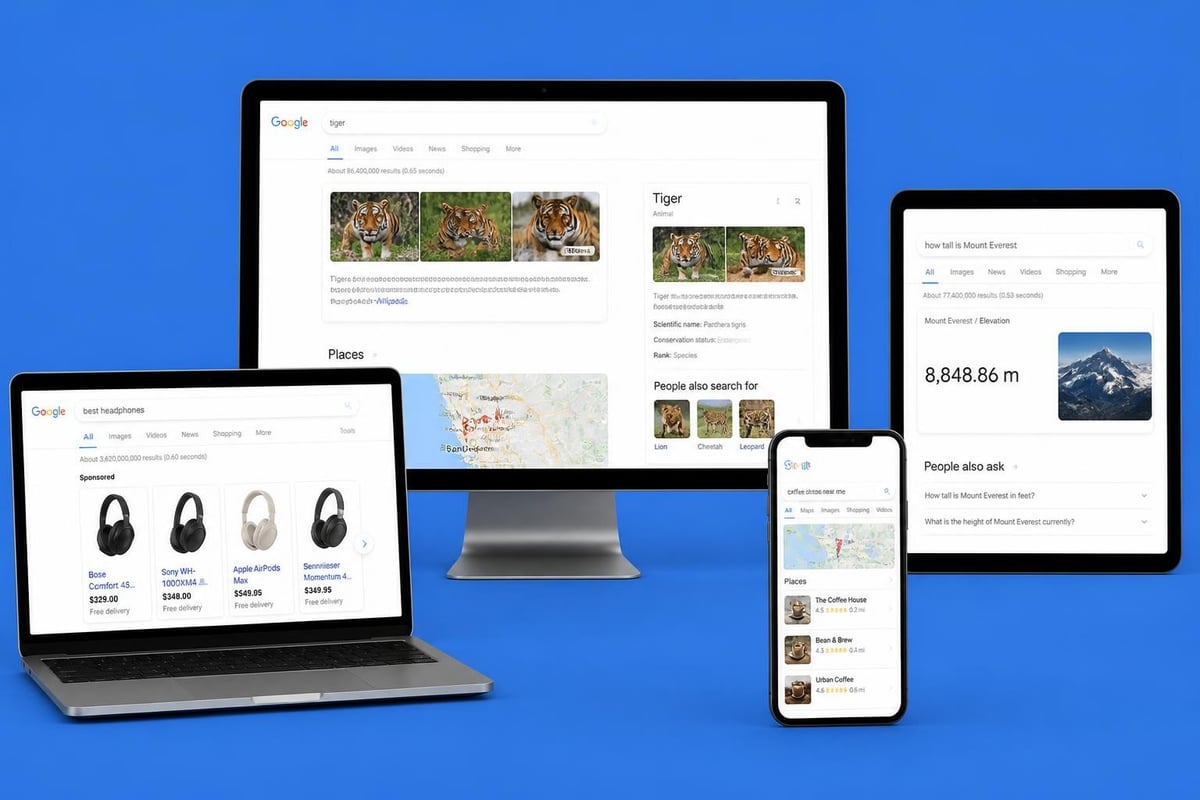
For product entities, location entities, and event entities, Google displays carousel results showing related options. Optimizing product pages with proper schema and comprehensive information helps inclusion in these carousels.
Content Strategy for Entity Based SEO
Creating content around entities requires planning beyond keyword research. You need to understand the entity landscape in your niche and create comprehensive coverage that establishes expertise.
Topic Clustering Around Entities
Build content clusters where pillar pages define core entities and cluster content explores related subtopics, attributes, and relationships. This approach signals strong topical authority to search engines.
For an SEO services business, entity-based clusters might include:
Core Entity: Technical SEO
- Pillar: Comprehensive guide to technical SEO
- Cluster 1: Site speed optimization for search engines
- Cluster 2: XML sitemaps and crawl budget
- Cluster 3: Mobile-first indexing implementation
- Cluster 4: Structured data for technical SEO
Each piece reinforces the others, creating a comprehensive entity definition across multiple pages. This is more effective than isolated keyword-targeted posts.
Answer Entity-Based Questions
Users search for information about entities, not just keywords. Create content that answers common entity questions:
- What is [entity]?
- Who created/founded [entity]?
- Where is [entity] located?
- When did [entity] launch/occur?
- Why is [entity] important?
- How does [entity] work/function?
Understanding transactional vs informational keywords helps you create content that addresses different entity-related user intents.
Maintain Content Freshness
Entities evolve. Products get updated, people change roles, organizations merge. Keeping entity information current signals that you’re a reliable source. Regular content audits ensure accuracy.
Content maintenance for entity optimization:
- Update facts and figures quarterly
- Refresh publication dates when substantially updating
- Add new entity relationships as they develop
- Remove outdated entity references
- Monitor entity mentions for accuracy
Measuring Entity Based SEO Success
Traditional SEO metrics still matter, but entity based seo requires additional measurement approaches. You need to track how well search engines understand and associate your content with relevant entities.
Entity Recognition Metrics
Use tools to check if your target entities are being recognized:
- Google’s Natural Language API shows which entities Google extracts from your content
- Search Console shows which queries trigger your content
- Knowledge Graph search confirms if your brand appears as an entity
- Brand search volume indicates entity recognition growth
Entity Association Signals
Monitor how your entity connects to others in search results:
- “People also search for” suggestions related to your brand
- Related searches that include your business name
- Knowledge panel connections to your competitors or partners
- Brand mentions in industry roundups and “best of” lists
| Metric | What It Measures | Target Trend |
|---|---|---|
| Brand search volume | Direct entity recognition | Increasing monthly |
| Entity mentions | Third-party entity references | Growing diversity of sources |
| Knowledge panel presence | Official entity recognition | Achieved and maintained |
| Schema validation | Technical entity implementation | 100% pass rate |
Traffic and Conversion Impact
Ultimately, entity based seo should drive qualified traffic and conversions. Track organic traffic from entity-related queries and monitor how well this traffic converts compared to generic keyword traffic.
Users searching for your brand entity or related entities typically have higher intent and conversion rates. They’ve moved beyond general research to specific solution evaluation.
Common Entity Based SEO Mistakes
Even experienced SEOs make mistakes when shifting to entity-focused optimization. Avoiding these pitfalls saves time and improves results.
Mistake 1: Treating Entities Like Keywords
Entities aren’t just another name for keywords. Stuffing entity names into content without providing meaningful context or relationships doesn’t help. Entity SEO requires understanding how concepts connect, not just mentioning them frequently.
Mistake 2: Ignoring Entity Disambiguation
Common names create confusion. “Apple” could refer to the fruit or the technology company. Always provide enough context for search engines to identify which specific entity you’re discussing.
Use qualifiers, related entities, and schema markup to disambiguate:
- “Apple Inc., the technology company”
- “Apple fruit, a member of the Rosaceae family”
- Organization schema vs. Thing schema
Mistake 3: Inconsistent Entity References
Using different names or formats for the same entity creates confusion. Decide on the official name and stick with it. Use the same format across all content and citations.
Consistency checklist:
- Business name exactly matches legal registration
- Address format matches Google Business Profile
- Phone number includes consistent formatting
- Author names match across all platforms
- Product names match official branding
Mistake 4: Neglecting Local Entity Signals
For location-based businesses, local entities matter enormously. Capturing customers with location-based SEO requires strong local entity establishment through citations, reviews, and geographic schema.
Mistake 5: Over-Relying on Automation
While tools help identify entities and opportunities, human judgment determines relevance and quality. Automated entity extraction might miss nuance or include irrelevant entities that confuse topical focus.
Entity Based SEO for Different Business Types
Different business models require different entity optimization approaches. Understanding how entity based seo applies to your specific situation helps prioritize efforts.
Service Businesses
Service providers should focus on establishing expertise entities, service category entities, and geographic entities. Your core entity network includes:
- Your business as an organizational entity
- Key team members as person entities
- Services offered as concept entities
- Service areas as location entities
- Industry certifications as credential entities
A freelance SEO specialist benefits from strong personal brand entity recognition combined with service category associations and geographic market entities.
E-commerce Businesses
Product entities drive e-commerce entity based seo. Each product should have comprehensive entity information including specifications, reviews, availability, and pricing. Connect product entities to brand entities, category entities, and related product entities.
Local Businesses
Local entities depend on strong geographic signals and community connections. Entity optimization focuses on location entities, local landmarks, neighborhood names, and proximity to other recognized local entities.
Content Publishers
Publishers build authority through consistent coverage of entity networks. Author entities gain recognition through quality content about related topical entities. Professional SEO specialists often build personal brand entities alongside their company entities.
Future of Entity Based SEO
As AI and natural language processing advance, entity based seo becomes more critical. Search engines continue shifting toward conversational search, voice queries, and semantic understanding.
Emerging trends:
- Multimodal entity recognition: Search engines identifying entities across text, images, and video
- Cross-platform entity unification: Connecting entity information from web, apps, and offline sources
- Entity-based personalization: Customizing results based on user’s entity preferences and history
- AI answer engines: Systems like ChatGPT and Bard relying heavily on entity knowledge
- Visual entity search: Identifying entities in images and providing related information
Optimizing for AI search algorithms requires strong entity foundations since AI systems depend on structured entity knowledge to generate accurate responses.
The shift toward answer engine optimization means content must clearly define entities, explain relationships, and provide comprehensive coverage. Generic keyword-focused content becomes less valuable as AI systems pull from authoritative entity sources.
Preparing for Entity-First Search
Position your content for the continued evolution toward entity-based search:
- Build comprehensive entity profiles across all platforms
- Create authoritative pillar content defining your core entities
- Establish consistent entity signals through schema and structured data
- Develop entity networks through strategic partnerships and mentions
- Monitor entity recognition and adjust content based on search engine understanding
Search algorithms will continue improving their ability to understand context, relationships, and user intent. The businesses and content creators who invest in entity based seo now position themselves for long-term visibility and relevance.
Technical Implementation Checklist
Successful entity based seo requires both strategic planning and technical execution. Use this checklist to ensure complete implementation:
Foundation Layer:
- Identify and document core business entities
- Map entity relationships and attributes
- Establish consistent entity naming conventions
- Create style guide for entity references
Content Layer:
- Audit existing content for entity coverage
- Identify entity gaps and content opportunities
- Create entity-focused content clusters
- Optimize existing content with entity context
Technical Layer:
- Implement Organization or Person schema sitewide
- Add Product schema to all product pages
- Include LocalBusiness schema for physical locations
- Mark up article authors with Person schema
- Validate all schema with testing tools
Authority Layer:
- Claim and optimize all business profile listings
- Build citations with consistent NAP information
- Secure mentions on authoritative industry sites
- Create or update Wikipedia presence
- Monitor brand entity search volume
Monitoring Layer:
- Set up entity tracking in analytics
- Monitor knowledge panel status
- Track entity-related keyword rankings
- Review entity extraction from content
- Measure entity association growth
Conclusion
Entity based seo represents the future of search optimization, focusing on real-world concepts and relationships rather than just keyword matching. By establishing strong entity signals, creating comprehensive entity-focused content, and implementing proper technical markup, businesses build sustainable search visibility that adapts as algorithms evolve. Whether you need help implementing entity optimization strategies or want to strengthen your overall search presence, Cyrel P. Nicolas provides comprehensive SEO services backed by nearly 15 years of experience helping businesses improve rankings and drive qualified traffic through proven optimization techniques.