Knowing where your website ranks in Google search results is fundamental to your SEO success. Without tracking your positions, you’re essentially driving blind, unable to measure the impact of your optimization efforts or identify opportunities for growth. Whether you’re managing your own site or working with clients, the ability to check your website Google ranking regularly helps you make informed decisions about your content strategy, technical improvements, and competitive positioning in 2026’s dynamic search landscape.
Why Checking Your Google Rankings Matters for Business Growth
Tracking your Google rankings reveals whether your SEO investment is paying off. When you check your website Google ranking consistently, you spot upward trends that validate your strategy and downward movements that signal problems before they cost you significant traffic.
Your rankings directly impact visibility, traffic, and revenue. A first-page position can mean the difference between dozens and thousands of monthly visitors. Most users never scroll past the first page of results, making those top 10 positions incredibly valuable real estate for your business.
Key Benefits of Regular Rank Tracking
- Measure SEO campaign effectiveness and justify marketing spend
- Identify which keywords are driving traffic versus those underperforming
- Spot algorithm update impacts before major traffic drops occur
- Track competitor movements and adjust your strategy accordingly
- Discover new ranking opportunities as your domain authority grows
Rankings also help you understand user intent. When specific pages rank for unexpected queries, you gain insights into how Google interprets your content and what searchers actually want.
The competitive intelligence alone makes rank tracking invaluable. Seeing competitors outrank you for important terms reveals gaps in your content or backlink profile that need immediate attention.
Free Tools to Check Your Website Google Ranking
You don’t need expensive software to track your positions effectively. Several free tools provide accurate ranking data that small businesses and freelancers can use to monitor their SEO progress.
Google Search Console remains the gold standard for free rank tracking. This official Google tool shows your average positions for every keyword that generates impressions, along with click-through rates and total clicks. It’s particularly reliable because the data comes directly from Google’s systems.
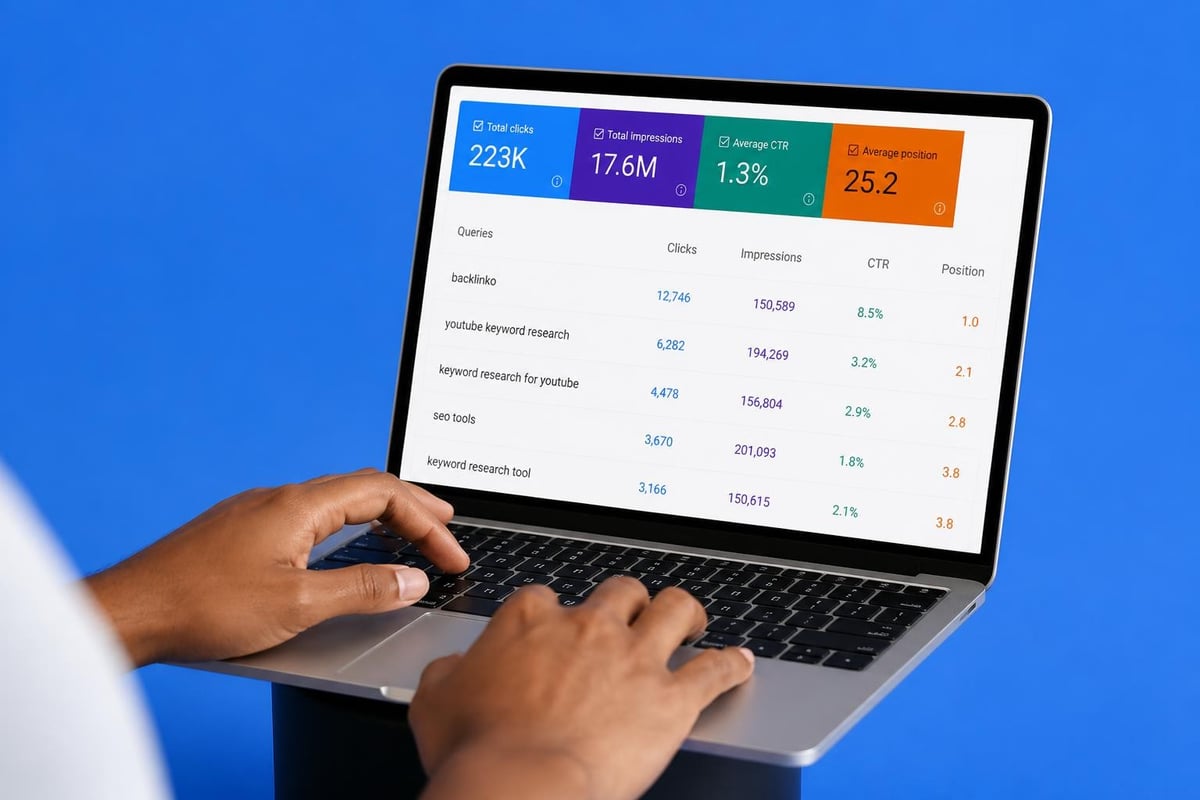
Semrush offers powerful free rank checking options. Their SERP checker tool lets you analyze the top 10 Google rankings for any keyword in any location, while the keyword rank checker provides detailed insights into your specific positions across different locations.
| Tool | Best Feature | Limitation |
|---|---|---|
| Google Search Console | Official Google data, unlimited tracking | 16-month data retention only |
| Semrush Free | Location-specific checks | 10 queries per day |
| Google Search | Manual verification | Time-consuming for multiple keywords |
| SE Ranking Free Trial | Comprehensive tracking | Limited trial period |
Manual searches work for spot-checks but have serious drawbacks. Google personalizes results based on search history and location, so you might see different rankings than your actual audience. Always use incognito mode and specify your target location when manually verifying positions.
Setting Up Google Search Console for Rank Tracking
Getting started with Search Console takes just a few steps. You’ll need to verify ownership of your website, which you can do through multiple methods including HTML file upload, DNS verification, or Google Analytics connection.
Once verified, Search Console begins collecting data immediately, though you’ll need to wait a few days before seeing meaningful reports. The Performance report shows your ranking data with filters for specific pages, queries, countries, and devices.
For agencies managing multiple clients, the white label approach means tracking each property separately through Search Console while maintaining your branded reporting elsewhere.
How to Interpret Your Ranking Data Correctly
Raw ranking numbers tell only part of the story. You need context to understand whether a position change matters and what action to take based on your data.
Position alone doesn’t equal success. A number one ranking for a keyword with zero search volume delivers no value. Always check search volume and commercial intent alongside your positions to prioritize optimization efforts on terms that actually drive business results.
Ranking fluctuations are normal. Google constantly tests different results and personalizes rankings based on user signals. A drop from position 4 to position 6 might not indicate a problem, especially if your impressions and clicks remain stable. Focus on trends over weeks and months rather than daily changes.
Understanding Ranking Volatility Patterns
- Normal fluctuation: 1-3 position movement daily
- Seasonal changes: Expected variations during holidays or industry cycles
- Algorithm updates: Sudden drops across multiple keywords simultaneously
- Competitor activity: Gradual decline as others publish better content
- Technical issues: Sharp drops affecting entire site sections
The relationship between rankings and traffic can be complex. Sometimes rankings improve but traffic decreases due to factors like featured snippets stealing clicks, AI overviews reducing CTR, or changes in search volume for your target keywords.
Click-through rate matters more than position for many queries. A compelling title and meta description at position 5 can capture more clicks than a bland result at position 3. Monitor CTR in Search Console to identify underperforming pages that need metadata optimization.
Advanced Ranking Factors That Impact Your Position
When you check your website Google ranking and find yourself stuck on page two or three, specific factors are holding you back. Understanding these elements helps you prioritize the right improvements.
Page speed has become increasingly critical in 2026. Core Web Vitals, particularly Largest Contentful Paint and Cumulative Layout Shift, directly impact rankings for competitive keywords. Slow-loading pages rarely crack the top positions regardless of content quality.
Technical SEO Elements Affecting Rankings
- Mobile responsiveness and mobile-first indexing compliance
- HTTPS security and overall site security signals
- Structured data markup helping Google understand content context
- Internal linking structure distributing authority across pages
- XML sitemap quality ensuring all important pages get crawled
- URL structure clarity using descriptive, keyword-rich URLs
Backlink quality remains paramount for achieving top rankings in competitive niches. The best link building strategies focus on earning natural links from authoritative sites rather than manipulative tactics that risk penalties.
Content depth and expertise separate top-ranking pages from the rest. Google’s algorithms in 2026 heavily favor comprehensive, well-researched content that demonstrates genuine expertise in the subject matter. Thin content rarely ranks well anymore, even with perfect technical optimization.
Understanding search intent is non-negotiable. When you target transactional versus informational keywords, you need content that matches what searchers actually want at that stage of their journey. A commercial page won’t rank for informational queries and vice versa.

Local Search Ranking Verification Strategies
Checking local rankings requires different approaches than tracking general organic positions. Local results vary dramatically based on the searcher’s physical location, making traditional rank checking tools less accurate.
Google Business Profile performance directly influences local rankings. Your GBP metrics, including search queries triggering your profile, map views, and user actions, provide insights into local visibility that complement traditional ranking data.
For businesses serving specific geographic areas, local SEO strategies must focus on the “local pack” that appears above organic results. These three map listings capture the majority of clicks for location-based searches.
Tools for Accurate Local Rank Tracking
| Method | Accuracy | Best For |
|---|---|---|
| Grid-based tracking tools | High | Multi-location businesses |
| Manual searches with GPS spoofing | Very high | Single location verification |
| GBP Insights | Medium | Overall visibility trends |
| Google Search Console filtered by region | Medium | Organic local performance |
Local business schema markup helps Google understand your location signals and can improve your chances of appearing in local results. NAP consistency across directories and citations also plays a critical role in local ranking stability.
Proximity to the searcher affects rankings significantly. A business five blocks away might outrank you for a searcher in that neighborhood, even if your overall SEO is stronger. This geographic personalization makes checking your website Google ranking for local terms particularly challenging without location-specific tools.
Tracking Rankings Across Different Devices and Locations
Mobile and desktop rankings often differ substantially. Google’s mobile-first indexing means your mobile version determines your overall rankings, but the actual positions users see can vary between devices due to interface differences and personalization.
Desktop searches typically show more results per page and different SERP features than mobile. Featured snippets, local packs, and knowledge panels appear differently across devices, affecting which organic positions actually receive clicks.
Device-Specific Ranking Considerations
- Mobile rankings often favor faster-loading pages more heavily
- Desktop results may show more ads, pushing organic results down
- Voice search rankings pull from different result sets than typed queries
- App results can appear on mobile but not desktop
- Image and video carousels occupy more mobile screen space
International ranking checks require VPN or proxy tools to simulate searches from different countries. Your site might rank page one in the Philippines but page five in the United States for the same keyword due to geographic relevance signals.
Language and region settings affect results beyond just translation. Google considers local search behavior, competitor density, and regional content preferences when determining rankings. A keyword easy to rank for in one market might be intensely competitive in another.
Common Ranking Check Mistakes to Avoid
Many businesses check their website Google ranking incorrectly, leading to false conclusions about their SEO performance. These mistakes waste time and can trigger unnecessary strategy changes.
Checking rankings while logged into Google accounts produces personalized results that don’t reflect what most searchers see. Your own search history, location, and preferences bias the results toward your site, creating an artificially optimistic view of your positions.
Tracking vanity keywords instead of commercial terms is a frequent error. Ranking number one for your company name means little if that keyword generates no traffic from potential customers. Focus on terms that align with business goals and actual search demand.
Ranking Check Pitfalls That Skew Your Data
- Using only one location to represent nationwide rankings
- Checking rankings immediately after publishing content (needs time to settle)
- Ignoring SERP features that appear above your organic listing
- Comparing rankings without controlling for seasonality
- Focusing solely on rankings while ignoring conversion rates
The best keyword research tools for 2026 help you identify which terms deserve tracking attention based on search volume, difficulty, and business relevance. Not every keyword your site ranks for matters enough to monitor closely.
Overreacting to normal ranking fluctuations causes strategy whiplash. Unless you see sustained drops across multiple related keywords or significant traffic decreases, minor position changes rarely warrant immediate action.
Creating a Sustainable Ranking Monitoring System
Consistent tracking requires a system that provides actionable insights without overwhelming you with data. The key is tracking the right metrics at the right frequency for your specific business needs.
Most businesses should check core keyword rankings weekly, with daily monitoring reserved for crucial commercial terms during active campaigns. Monthly deep dives into Search Console data reveal trends that daily checks might miss.
Building Your Ranking Tracking Workflow
Start with a prioritized keyword list. Include 20-30 terms split across brand terms (5-10), commercial terms (10-15), and informational terms (5-10) relevant to your business. This mix provides a balanced view of your visibility across the customer journey.
Set baseline measurements when you first check your website Google ranking for each term. Record the date, position, and any relevant context like recent algorithm updates or site changes. This baseline helps you measure progress accurately over time.
Automate what you can, but maintain human oversight. Automated rank tracking tools save time on data collection, but you still need to interpret the results, identify patterns, and make strategic decisions based on what you discover.
Document your findings and actions in a simple spreadsheet or project management system. When rankings change, note potential causes like new content, backlinks acquired, technical fixes implemented, or competitor actions observed.
Turning Ranking Data Into Actionable SEO Improvements
Data without action wastes your time. Once you check your website Google ranking and identify underperforming terms, you need a systematic approach to improve those positions.
For keywords ranking on pages 2-3 (positions 11-30), you’re close to breakthrough performance. These terms often respond well to targeted improvements like enhanced content depth, additional internal links, or strategic backlink acquisition.
Improvement Strategies Based on Current Position
| Current Position | Primary Focus | Secondary Focus |
|---|---|---|
| 11-30 | Content expansion, internal linking | Strategic backlinks |
| 31-50 | Content relevance, technical SEO | Topic authority building |
| 51+ | Keyword intent alignment | Domain authority growth |
| Not ranking | Page optimization basics | Indexing verification |
Pages ranking on page one but below position 3 benefit most from click-through rate optimization. Rewriting titles and meta descriptions to be more compelling can boost traffic significantly without changing your actual position.
Featured snippets offer a shortcut to position zero, appearing above all organic results. Structuring content with clear answers to common questions, using lists and tables, and implementing FAQ schema markup increase your chances of capturing these coveted positions.
Content gaps identified through ranking analysis reveal opportunities. When competitors rank for valuable terms you don’t, analyze their content to understand what Google considers relevant for those queries. Then create superior content addressing the topic more comprehensively.
Working with experienced SEO specialists can accelerate your ranking improvements by applying proven strategies tailored to your specific situation and competitive landscape.
Using Ranking Trends to Predict Future Performance
Historical ranking data reveals patterns that help forecast where your site is heading. Upward trajectories signal effective SEO, while gradual declines warn you to adjust course before losing significant visibility.
Algorithm updates create distinct patterns in ranking data. Sudden drops across multiple unrelated keywords on the same date typically indicate an algorithm change rather than site-specific issues. Tracking these events helps you understand whether your rankings fell due to your actions or Google’s shifting priorities.
Seasonal ranking patterns repeat annually in many industries. Retail terms spike before holidays, tax-related queries increase in early spring, and educational keywords surge before school sessions. Recognizing these patterns helps you distinguish normal fluctuations from genuine problems.
Competitive analysis through ranking data shows market shifts. When multiple competitors simultaneously gain positions you’ve lost, they’ve likely discovered an effective strategy worth investigating and potentially adopting for your own site.
conclusion
Tracking your rankings is just the beginning. The real value comes from using that data to guide continuous improvement in your content, technical SEO, and overall online strategy. If you need expert help interpreting your ranking data and implementing proven strategies to improve your positions, Cyrel P. Nicolas brings nearly 15 years of SEO experience to help Filipino businesses and international clients achieve sustainable visibility growth through white-hat optimization techniques.