SEO for Beginners: How to Rank on Google in 2027
Google has plenty of options. Search for “best running shoes for flat feet”, and you will find page after page covering the same topic. So why does one page appear above another?
The answer comes down to how well each page meets the searcher’s needs, how trustworthy it appears, and whether Google can access and understand it. That is where search engine optimization, or SEO, comes in.
My advice is to keep things simple at the start. You do not need to memorize hundreds of ranking factors. You need a clear understanding of the fundamentals, followed by a practical process you can repeat.
And with AI changing how people find information, the goal is becoming broader. You want content that can earn visibility in Google’s organic results and serve as a useful source for AI-powered search experiences.
What You’ll Learn
- Prioritise relevance, authority, and technical basics before tackling advanced SEO tasks.
- Choose specific keywords with existing demand and create content that satisfies search intent.
- Use Search Console data to identify opportunities and improve published pages.
- Make content clear, well-supported, and easy to reference across search and AI platforms.
Table of Contents
- Understand What Appears on a Google Results Page
- The Three SEO Foundations to Focus On First
- Step 1: Find Keywords People Already Search For
- Step 2: Create Content That Deserves to Rank
- Step 3: Build Authority Through Links and Mentions
- Step 4: Track Your Results and Improve Your Pages
- Step 5: Adapt Your SEO for AI and Zero-Click Searches
- Keep Your SEO Process Practical
Understand What Appears on a Google Results Page
Before optimizing your website, understand where you are trying to appear. A Google search engine results page, often called a SERP, can include three important types of results:
- AI Overviews: AI-generated summaries that answer a query and may reference supporting sources.
- Sponsored results: Paid advertisements, commonly charged when someone clicks.
- Organic results: Unpaid listings that SEO helps your website compete for.
The layout varies by search. An AI Overview will not appear for every query, and ads do not always occupy the same position. You may also see videos, maps, featured snippets, and People Also Ask questions.
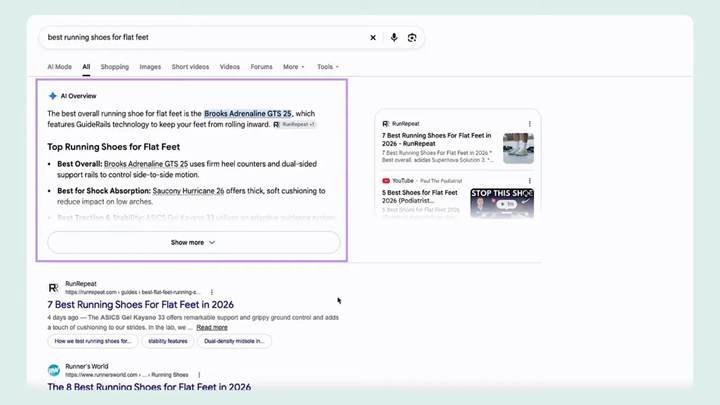
For a beginner, the important distinction is this: paying for an advertisement is different from earning an organic ranking. Start with the foundations of organic search, then build towards visibility across the wider search ecosystem.
The Three SEO Foundations to Focus On First
Google considers many signals, including relevance, quality, authority, freshness, and user experience. Rather than trying to tackle everything at once, organize your work around three foundations: relevance, authority, and technical SEO.
1. Relevance: Give People the Content They Need
Relevance starts with a straightforward question: does this page actually help with what the person searched for?
That means going beyond including the right keyword. You also need to understand search intent, or what someone wants to accomplish with that search.
Take “local SEO” as an example. Someone searching for that broad topic may need an explanation of what local SEO is, how it works, and how to get started. A short definition alone may not be enough. A generic service homepage or a loosely related tips article may not satisfy that need either.
Semrush’s local SEO guide illustrates this approach by combining an explanation with practical guidance. The lesson is not to copy the page. It is to match the depth and purpose of your content to the search.
Google can use different parts of a page to understand its topic, including:
- The title tag and main headline.
- The introduction and subheadings.
- The main body content.
- The images and their context.
- The overall subject and purpose of the page.
Use your target keyword naturally where it helps explain the topic. Do not force it into every paragraph.
For example, a guide to the best email marketing software for small businesses should compare tools, explain who each option suits, include pricing information, and help readers make a decision. Repeating “email marketing software” again and again adds nothing useful.
Cover the topic properly instead of chasing keyword density. Google identifies keyword stuffing in its spam policies, so excessive repetition can create problems rather than improve rankings.
2. Authority: Give Others a Reason to Trust Your Content
Relevance gets your page into consideration. But when many pages answer the same question, credibility matters too.
One important authority signal is a backlink, which is a link from another website to yours. Think of it as a recommendation. Another publisher is pointing readers towards something on your site that they consider useful.
However, not every recommendation carries the same weight. A relevant editorial link from a trusted website can be far more valuable than a large collection of low-quality links.
The practical lesson is simple: quality matters more than link count. Focus on earning references from credible websites in your industry rather than collecting links for the sake of a bigger number.
Authority also involves your wider reputation. Trusted publications mentioning your brand, experts referencing your work, and people actively looking for your business all contribute to how established your brand appears online.
These are worth building, especially as discovery expands into AI tools. Just avoid treating every brand mention as a guaranteed ranking boost or assuming it works exactly like a backlink.
3. Technical SEO: Remove the Problems Holding Your Site Back
Technical SEO can become complicated quickly. JavaScript rendering, canonical tags, log files, structured data, and site architecture all have their place. But they are not where every beginner needs to start.
First, check these three basics:
- Make sure important pages are eligible for indexing. An accidental noindex instruction tells Google not to include a page in search results. That is useful for pages you want excluded, but a serious problem for pages you want to rank.
- Make your website easy to use on mobile. People should be able to read your content and navigate without struggling. You do not need the most elaborate design. You need a usable one.
- Keep loading times reasonable. Your site does not need to break speed records, but visitors should not be left waiting for the content they came for.
If you need more detail on indexing controls, Google explains how noindex works. Start by removing obvious barriers before spending time on advanced technical changes.
Step 1: Find Keywords People Already Search For
SEO starts with existing demand. Do not publish an article and simply hope people are searching for it. Find the questions and topics your audience already cares about.
Begin with a few broad seed topics related to your niche. For a fitness website, these might include:
- Workout plans.
- Building muscle.
- Losing weight.
- Home workouts.
Then use those topics to discover more specific searches. Google autocomplete and related searches are useful starting points. A keyword research tool such as Semrush can help you explore more ideas and assess competition. Reddit and relevant forums can reveal the exact language people use when describing their problems.
Your first target does not need thousands of monthly searches. It needs to be specific, relevant to your website, and realistic to compete for.
For example, “home workouts” is a broad topic. “Best home workout equipment for small apartments” describes a much clearer need. That specificity gives you a more focused brief and a better opportunity to create something genuinely useful.
A narrower keyword is not automatically easy to rank for, so check the results before committing to it.
Step 2: Create Content That Deserves to Rank
Once you have a target keyword, search for it and review several of the leading results. This helps you understand what Google currently considers relevant for that query.
Ask two questions:
- What do the leading pages consistently cover?
- What are they missing that would make the answer more useful?
The first question helps you identify essential coverage. The second helps you find a reason for your page to exist.
Your job is not to rewrite the same information with slightly different wording. It is to satisfy the same need while adding useful value.
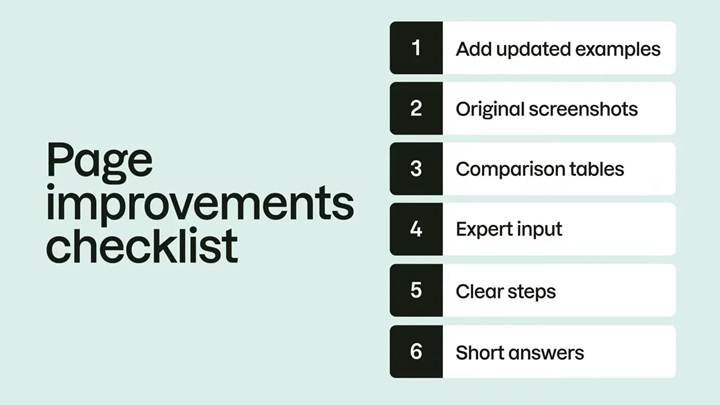
Depending on the topic, you could improve the page with:
- Updated examples that reflect the current situation.
- Original screenshots showing a process or result.
- Clear comparisons that make choices easier.
- Relevant expert input.
- Practical, easy-to-follow steps.
- A concise answer near the beginning.
Semrush’s technical SEO guide is a useful example of comprehensive coverage. It explains the subject and supports it with practical material around crawling, site structure, and related tasks.
That is the standard to aim for: a page that gives readers what they need to understand the topic and take the next step. More words are not the goal. A better answer is.
Step 3: Build Authority Through Links and Mentions
Strong content may be enough to compete for some less competitive keywords. For tougher searches, you will often need stronger authority as well.
Give other websites a good reason to reference you. Useful approaches include:
- Publishing original statistics: Offer findings that others can cite.
- Creating data studies: Investigate questions your industry wants answered.
- Contributing guest articles: Share useful expertise with relevant publications.
- Doing digital PR: Bring credible stories, research, or insights to publishers.
For example, Semrush’s content marketing statistics page was reported to have earned more than 8,000 backlinks. The useful lesson is not the number itself. It is that reference-worthy information gives publishers a reason to link.
Brand mentions matter to the wider picture too. A trusted website might cite your research, include your product in a roundup, or reference your advice without linking directly.
Semrush’s inclusion in third-party SEO tool roundups illustrates this kind of visibility. Those references help establish a recognisable presence beyond the brand’s own website.
For a smaller site, focus on being useful within your niche. You do not need to be mentioned everywhere. You need credible reasons for the right people and publications to reference your work.
Step 4: Track Your Results and Improve Your Pages
Publishing is the beginning, not the finish line. The process is publish, measure, and improve.
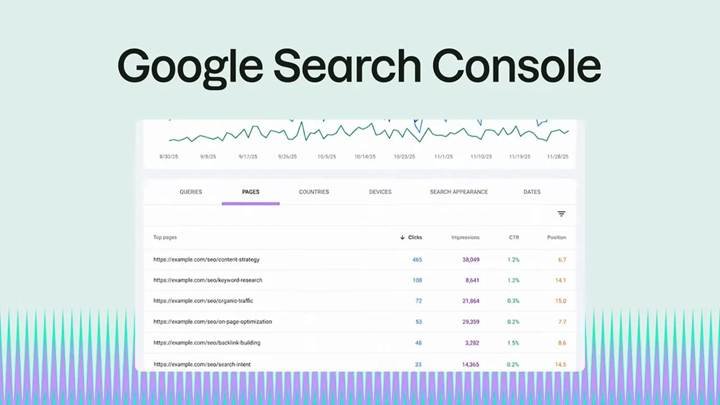
Start with Google Search Console. It is a free tool that helps you understand how your website performs in Google Search.
The main metrics to understand are:
- Impressions: How often your pages appear in search results.
- Clicks: How often people click through to your website.
- Average position: The average ranking position recorded for your results.
- Click-through rate: The percentage of impressions that produce a click.
- Queries: The searches that bring your pages into the results.
You can also use Semrush to monitor rankings, compare competitors, and find additional keyword opportunities. The important part is turning the data into action.
If a Page Has Many Impressions but Few Clicks
Review the title tag and meta description. Do they clearly explain the value of the page? Do they match the searcher’s needs?
Make them more useful and compelling without promising something the content does not deliver. Also consider the page’s position and the surrounding search features, because those can affect clicks.
If a Page Is Close to Stronger Rankings
A page sitting around the second page of results is worth reviewing. Check whether its examples are outdated, its explanation is incomplete, or competing pages answer the query more effectively.
Improve the substance rather than making changes just to make the page look updated.
If You Discover Relevant Queries You Did Not Target
Consider whether those searches belong on the existing page. If they support the same intent, add useful coverage. If they represent a separate need, a dedicated page may be more appropriate.
You do not have to get everything right on day one. Search data helps you refine your decisions over time.
Step 5: Adapt Your SEO for AI and Zero-Click Searches
Not every search leads to a website visit. Google may answer the question directly, an AI Overview may summarise the topic, or another search feature may provide enough information.
This is why modern SEO is not only about earning clicks. It is also about creating content that can be found, cited, mentioned, and trusted.
The practical approach is to make your information easy for both people and systems to understand:
- Give clear, factual answers. Avoid hiding the main point behind a long introduction.
- Use descriptive sections. Break the topic into focused parts that are easy to follow.
- Add original data. Give others something useful to reference.
- Include expert input. Support the content with relevant knowledge.
- Show real examples. Demonstrate how the advice works in practice.
Breaking content into focused sections is sometimes called chunking. It helps readers locate answers and makes the relationships between ideas clearer.
Semrush’s growth hacking guide illustrates this structure with an early explanation, clearly labelled strategies, supporting information, and practical examples.
These qualities can support discoverability in organic search and AI tools such as ChatGPT and Claude. They do not guarantee a citation or a ranking, but they make the content more useful as a source.
Think beyond one results page. Your audience may discover information through organic listings, AI Overviews, featured snippets, videos, forums, review websites, and trusted industry publications.
The underlying principle stays the same: create useful information and build a credible presence wherever your audience searches.
Keep Your SEO Process Practical
You do not need to solve every SEO problem at once. Start with one relevant keyword, create a page that satisfies the search, and make sure technical issues are not keeping it out of Google.
Then build credibility, measure performance, and improve what you have published.
Good SEO is not about repeating a keyword until Google notices. It is about making your content worth finding, easy to understand, and credible enough to reference.