Search engine optimization (SEO) is one of the most powerful tools for driving consistent traffic to your website. But if you are looking to improve rankings, you might find yourself asking about the difference between on-page and off-page SEO. Understanding both is essential because they work hand in hand to build visibility, credibility, and long-term success online.
We help businesses and individuals understand the core principles of SEO and apply strategies that deliver results. This guide breaks down on-page vs off-page SEO, how they differ, and how you can use both effectively.
What is On-Page vs Off-Page SEO
On-page SEO focuses on optimizing elements directly within your website. These are things you can control, like content quality, keywords, meta descriptions, internal links, and website structure. The goal is to make your website search engine-friendly while offering visitors a seamless experience.
Off-page SEO, on the other hand, refers to actions taken outside your website that influence your rankings. These include link building, social media presence, influencer outreach, guest blogging, and brand mentions. Think of it as your site’s reputation in the digital world.
In short, the difference between on-page SEO and off-page SEO lies in control. On-page SEO is about fine-tuning your own site, while off-page SEO is about building trust and authority through external signals.
The Importance of On-Page SEO
When discussing on-page vs off-page SEO, many beginners underestimate the value of on-page work. Without a strong foundation, off-page strategies may not deliver the best results.
Key on-page SEO practices include:
- Optimizing title tags and meta descriptions for clarity and keyword use.
- Writing high-quality, keyword-rich content that answers user intent.
- Structuring pages with headings, bullet points, and proper formatting.
- Using internal links to guide readers and improve crawlability.
- Ensuring fast load speed and mobile responsiveness.
For example, having a blog post with the right keywords, like on-page SEO vs off-page SEO, improves relevance and helps Google understand your topic. If you want your website to perform, investing in solid on-page SEO is the first step.
The Power of Off-Page SEO
While on-page SEO helps build a strong base, off-page SEO strategies are crucial for establishing authority. Search engines use backlinks and external mentions as trust signals. The more authoritative sites that link back to you, the more credibility your website earns.
Common off-page SEO strategies include:
- Guest blogging on reputable sites in your niche.
- Building quality backlinks through outreach and partnerships.
- Maintaining an active presence on social media platforms.
- Encouraging satisfied clients to leave reviews and testimonials.
- Participating in forums or communities to establish expertise.
When it comes to off-page SEO vs on-page SEO, one cannot replace the other. You need both to maximize visibility. A website with strong content but no backlinks will struggle to compete, while a site with many backlinks but poor on-page optimization may not convert visitors effectively.
Difference Between On-Page and Off-Page SEO
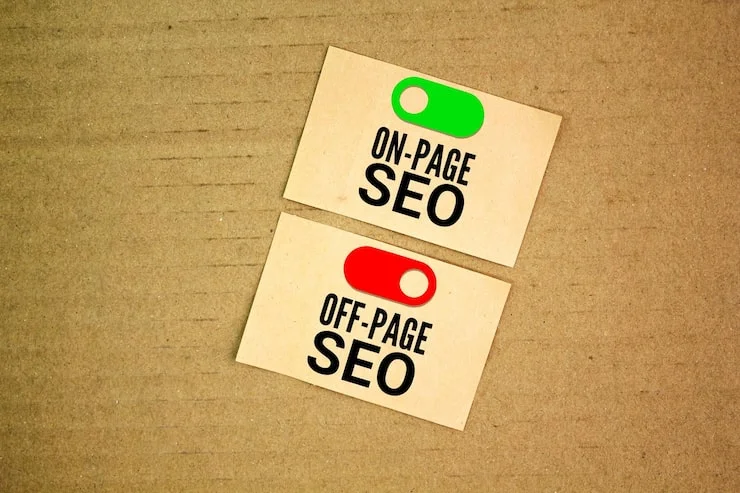
So what is the real difference between off-page and on-page SEO? The easiest way to explain it is that on-page SEO makes your website appealing to both users and search engines, while off-page SEO proves to search engines that your site is trustworthy and credible.
Here’s a quick comparison:
- On-Page SEO: Titles, keywords, meta tags, content, site speed, internal linking.
- Off-Page SEO: Backlinks, brand mentions, guest posts, social signals, influencer marketing.
Both play vital roles. Without on-page SEO, your site may not be properly indexed. Without off-page SEO, your site may not gain authority in your niche. According to Search Engine Journal, Google’s algorithm takes into account both content relevance and authority, which is why focusing on just one side will never be enough.
How On-Page and Off-Page SEO Work Together
A well-optimized website supported by authority-building strategies is the winning formula for long-term growth. When you combine them, you create a cycle:
- On-page SEO ensures your content is relevant and easy to navigate.
- Off-page SEO validates your site as credible and worth ranking higher.
- Together, they increase visibility, traffic, and conversions.
If you are serious about improving your digital presence, it is not about choosing on-page vs off-page SEO. It is about finding the balance and applying both consistently. We provide tailored strategies that cover all aspects of SEO to help businesses scale.
Conclusion
Understanding the difference between on-page and off-page SEO is key to building a successful website. On-page SEO builds the foundation by making your site search-friendly and user-focused. Off-page SEO strengthens your credibility and expands your reach. To grow your online presence, you need both working in harmony.
If you are ready to take your website to the next level, we can help. Reach out to us today, call us at +639985555108, or email cyrelnicolas@gmail.com. Let’s build strategies that boost your traffic and grow your business.