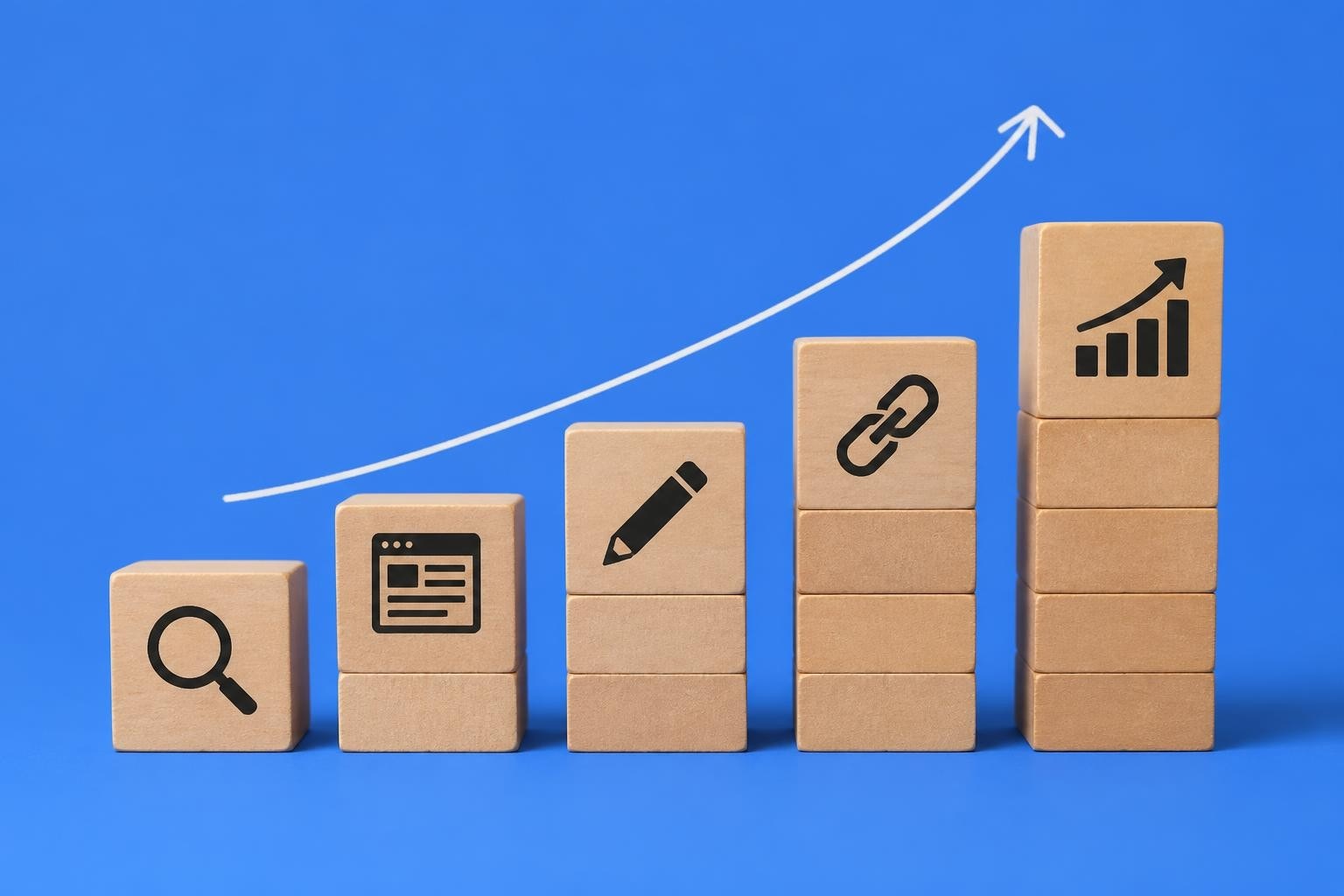
When you want to improve keyword ranking, you need more than just good content. You need a strategic approach that combines technical precision, content quality, user experience, and authority building. Whether you're targeting local customers in Manila or competing globally, understanding how search engines evaluate and rank pages is essential for climbing the search results. This guide walks through proven methods that work in 2026, backed by real-world experience and current ranking factors.
Understanding How Search Engines Rank Keywords
Search engines rank keywords based on hundreds of signals that evaluate relevance, authority, and user satisfaction. The most critical factors include content quality, backlink profile, page experience, technical health, and user engagement metrics.
Google's algorithm prioritizes pages that best answer search intent while providing a smooth, fast experience. According to SEO.com’s comprehensive ranking factors guide, the 2026 landscape emphasizes E-E-A-T (Experience, Expertise, Authoritativeness, Trustworthiness) alongside traditional signals.
Key ranking signals in 2026:
- Content relevance and depth
- Backlink quality and quantity
- Page speed and Core Web Vitals
- Mobile responsiveness
- User engagement (time on page, bounce rate)
- Domain authority and trust signals
Search engines also consider keyword placement, semantic relevance, and how well your content matches the searcher's intent. Understanding the difference between transactional vs informational keywords helps you optimize for the right search intent and improve your ranking potential.

Conduct Strategic Keyword Research and Selection
To improve keyword ranking effectively, you must start with keywords you can realistically rank for. This means analyzing search volume, competition, and your website's current authority.
Target Long-Tail Keywords First
Long-tail keywords (3-5 word phrases) typically have lower competition and higher conversion rates. Instead of targeting "SEO services," aim for "affordable SEO services for small businesses Manila." These specific phrases attract qualified visitors who are closer to making decisions.
Tools like SEMrush, Ahrefs, and Google Keyword Planner help identify opportunities. Look for keywords with decent search volume (100+ monthly searches) but lower keyword difficulty scores (below 40 for newer sites).
Analyze Competitor Rankings
Study the top 10 results for your target keywords. What makes their content rank? Note their:
- Word count and content structure
- Topic coverage and subtopics
- Backlink profiles
- Page speed and user experience
- Use of multimedia (images, videos, tables)
HubSpot’s keyword ranking guide emphasizes that competitor analysis reveals content gaps you can fill and opportunities your competitors missed.
Optimize On-Page SEO Elements
On-page optimization directly impacts how well search engines understand and rank your content. Every element from title tags to internal linking contributes to your keyword ranking potential.
Craft Compelling Title Tags and Meta Descriptions
Your title tag is the single most important on-page element. Include your target keyword near the beginning and keep it under 60 characters. Make it compelling enough to earn clicks, because click-through rate affects rankings.
Meta descriptions don't directly impact rankings, but they influence clicks. Write 140-150 character descriptions that include your keyword naturally and provide a clear value proposition.
Structure Content with Header Tags
Use H2 and H3 tags to organize content logically. Include your primary keyword in at least one H2 and related terms in H3s. This helps search engines understand your content hierarchy and improves readability.
| On-Page Element | Best Practice | Impact on Rankings |
|---|---|---|
| Title Tag | Keyword near start, under 60 chars | Very High |
| Meta Description | 140-150 chars, includes keyword | Indirect (CTR) |
| H2 Headers | Primary keyword in at least one | High |
| URL Structure | Short, descriptive, includes keyword | Medium |
| Image Alt Text | Descriptive with keyword where natural | Medium |
Optimize URL Structure
Keep URLs short, descriptive, and keyword-rich. Use hyphens to separate words. A clean URL like "/improve-keyword-ranking-guide/" performs better than "/page?id=12345" both for users and search engines.
Create High-Quality, Comprehensive Content
Content quality remains the foundation of any effort to improve keyword ranking. Search engines reward content that thoroughly answers questions and provides genuine value to readers.
Successful content in 2026 includes:
- In-depth coverage: Address the topic comprehensively, covering related questions and subtopics
- Original insights: Add unique perspectives, data, or examples that competitors don't offer
- Regular updates: Refresh content to keep it current and accurate
- Multimedia elements: Include images, videos, tables, and charts to enhance understanding
- Clear formatting: Use short paragraphs, bullet points, and headers for scannability
Search Engine Journal’s content ranking guide highlights that longer, more comprehensive content typically outranks shorter pieces, but only when the length adds genuine value.
Match Search Intent Precisely
Understanding what users actually want when they search is critical. A search for "SEO packages" wants pricing and service details, not a 3,000-word history of SEO. Analyze the current top 10 results to understand the expected format, depth, and angle.
Search intent typically falls into four categories:
- Navigational: Looking for a specific website
- Informational: Seeking answers or knowledge
- Transactional: Ready to purchase or take action
- Commercial investigation: Comparing options before buying
Align your content format and depth with the dominant intent for your target keyword.

Build a Strong Internal Linking Structure
Internal links help search engines discover pages, understand site structure, and distribute page authority throughout your website. Strategic internal linking can significantly improve keyword ranking for both the linking and linked pages.
Link to Related Content
When you mention topics covered elsewhere on your site, link to those pages using descriptive anchor text. For example, if discussing image optimization, link to guides about optimizing images for faster loading and better rankings.
Aim for 3-5 internal links per page, choosing targets that add genuine value for readers. Don't force links where they don't fit naturally.
Update Older Content with New Links
As you publish new content, go back to older relevant pages and add links to the new material. This keeps your content interconnected and helps new pages gain authority faster.
Improve Technical SEO Foundation
Technical issues prevent search engines from properly crawling, indexing, and ranking your pages. Even brilliant content won't rank well on a technically flawed website.
Fix Crawling and Indexing Issues
Ensure search engines can access all important pages. Check your robots.txt file doesn't block critical content. Submit an XML sitemap to Google Search Console. Monitor the Index Coverage report for errors.
Common technical problems include:
- Duplicate content across multiple URLs
- Broken links (404 errors)
- Redirect chains or loops
- Missing or incorrect canonical tags
- Slow server response times
Optimize Page Speed and Core Web Vitals
Page speed directly impacts rankings and user experience. Google’s Core Web Vitals measure loading performance, interactivity, and visual stability.
Key metrics to optimize:
- Largest Contentful Paint (LCP): Should occur within 2.5 seconds
- First Input Delay (FID): Should be less than 100 milliseconds
- Cumulative Layout Shift (CLS): Should be less than 0.1
Compress images, enable browser caching, minify CSS and JavaScript, and use a content delivery network (CDN) to improve these metrics.
Ensure Mobile-First Compatibility
Google uses mobile-first indexing, meaning it primarily uses the mobile version of your site for ranking. Your mobile site must be fully functional, fast, and provide the same content as the desktop version.
Test your site using Google's Mobile-Friendly Test tool and fix any issues before they impact rankings.
Build Quality Backlinks Strategically
Backlinks remain one of the strongest ranking signals. However, quality matters far more than quantity. A few links from authoritative, relevant sites outweigh dozens from low-quality directories.
Focus on Relevant, Authoritative Sources
Target backlinks from sites in your industry or niche. A link from a respected marketing blog carries more weight for SEO content than a link from a random directory.
Effective link building strategies:
- Create linkable assets (original research, comprehensive guides, tools)
- Guest post on industry blogs and publications
- Build relationships with journalists and bloggers
- Earn mentions through digital PR campaigns
- Reclaim unlinked brand mentions
Understanding the role of backlinks and maintaining a high-quality link profile is essential for sustainable ranking improvements.
Avoid Black Hat Link Schemes
Never buy links, participate in link farms, or use automated link building tools. These tactics risk penalties that can devastate your rankings. Focus on earning links through valuable content and genuine relationships.
| Link Type | Value | Risk Level |
|---|---|---|
| Editorial links from authority sites | Very High | None |
| Guest post links (relevant sites) | High | Low |
| Business directory listings | Medium | None |
| Reciprocal links (excessive) | Low | Medium |
| Paid/bought links | None | Very High |
Monitor and Analyze Performance
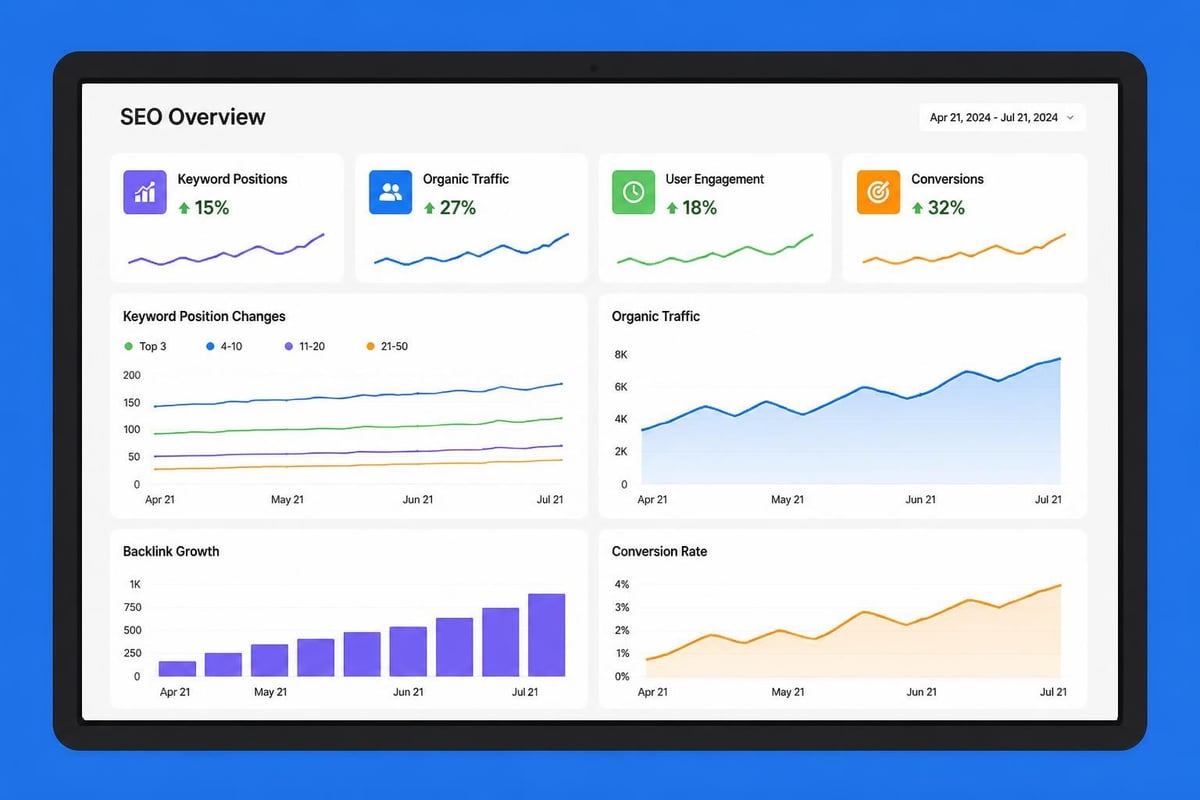
You can't improve keyword ranking without tracking what's working. Regular monitoring helps you identify opportunities, catch problems early, and refine your strategy.
Track Rankings and Traffic
Use Google Search Console to monitor keyword positions, impressions, and click-through rates. Third-party tools like SEMrush or Ahrefs provide more detailed ranking tracking across multiple keywords.
Don't obsess over daily fluctuations. Focus on weekly and monthly trends. Small ranking changes are normal; significant drops warrant investigation.
Analyze User Behavior Metrics
Google Analytics reveals how users interact with your content. High bounce rates or short time-on-page suggest your content doesn't match search intent or fails to engage readers.
Key metrics to monitor:
- Average time on page (higher is better)
- Bounce rate (lower is better for most content)
- Pages per session (indicates engagement)
- Conversion rate (for transactional pages)
If a page ranks well but doesn't convert, the problem might be your content quality, call-to-action placement, or page design rather than SEO.
Update and Refresh Existing Content
One of the most effective ways to improve keyword ranking is updating existing content rather than always creating new pages. SEMrush’s SEO improvement strategies emphasize that refreshing old content can quickly boost rankings.
Identify Underperforming Pages
Look for pages ranking on page 2 or 3 (positions 11-30) for valuable keywords. These pages have potential but need improvement to break into the top 10.
Also target pages that once ranked well but have declined. Often a simple update restores lost rankings.
Add Fresh Information and Examples
Update statistics, examples, and case studies. Add new sections covering recent developments or questions. Expand thin content to provide more comprehensive coverage.
After updating, change the publication date and resubmit the URL to Google Search Console for re-indexing.
Leverage Schema Markup and Rich Snippets
Schema markup helps search engines better understand your content and can earn enhanced search result features like star ratings, FAQs, or how-to steps.
Implement Relevant Schema Types
Choose schema types that match your content. Common types include Article, FAQPage, HowTo, Product, Review, and LocalBusiness.
For local businesses, implementing proper local business schema markup can significantly improve visibility in local search results.
While schema doesn't directly improve keyword ranking, enhanced listings typically earn higher click-through rates, which indirectly benefits rankings.
Optimize for User Experience Signals
Google increasingly uses user experience signals to evaluate page quality. A site that's difficult to use won't rank well regardless of content quality.
Critical UX elements:
- Intuitive navigation structure
- Fast loading times across all devices
- Mobile-friendly design and functionality
- Clear calls-to-action
- Readable fonts and proper contrast
- No intrusive interstitials or popups
Michigan Tech’s SEO guidelines emphasize that user-focused sites naturally perform better in search because they satisfy searcher needs more effectively.
Reduce Bounce Rate Through Better Engagement
High bounce rates signal that visitors don't find what they expect. Improve engagement by:
- Answering the main question in the first paragraph
- Using compelling visuals to break up text
- Adding interactive elements like calculators or quizzes
- Including related content suggestions
- Ensuring fast page loads
Focus on Topical Authority and Content Clusters
Building topical authority means becoming a recognized expert in your niche. This involves creating comprehensive content covering all aspects of your core topics.
Create Content Clusters
Choose a broad pillar topic and create detailed content covering every related subtopic. Link all cluster content back to the pillar page and between related cluster pages.
For example, a pillar page about "SEO Services" might link to cluster pages about technical SEO, content optimization, link building, local SEO, and how to increase web traffic through various channels.
This structure helps search engines understand your expertise and can improve keyword ranking across your entire topic area.
Leverage Local SEO for Geographic Keywords
If you serve specific locations, local SEO optimization helps you improve keyword ranking for geographic searches like "SEO specialist Manila" or "WordPress developer Philippines."
Local ranking factors:
- Google Business Profile optimization
- Consistent NAP (Name, Address, Phone) across directories
- Local citations and backlinks
- Locally-focused content
- Reviews and ratings
- Geographic keywords in content
Working with a freelance SEO expert who understands local market dynamics can accelerate results, especially when competing in specific geographic regions where local authority matters as much as general domain strength.
Improving keyword ranking requires a comprehensive approach that balances technical excellence, content quality, user experience, and authority building. By implementing these strategies consistently and monitoring results, you'll see measurable improvements in both rankings and organic traffic. If you need expert guidance to accelerate your SEO results and achieve sustainable growth, Cyrel P. Nicolas brings nearly 15 years of proven experience helping businesses improve their search visibility through strategic, white-hat SEO techniques.